
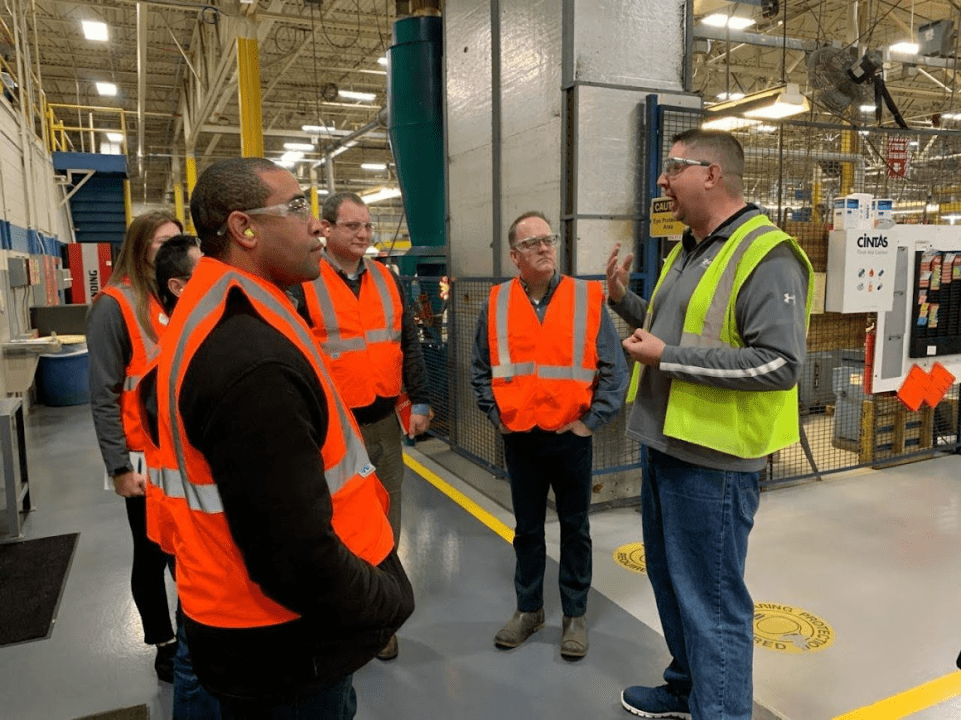
In a continuous improvement culture, the concept of “gemba” (correct spelling in Japanese: genba)—the actual place where work is done—takes center stage. It’s where value is created, problems are identified, and solutions are implemented. Engaging with frontline workers at the gemba is crucial for leaders aiming to foster a culture of continuous improvement. Here are five effective strategies for leaders to engage with their frontline workers at the gemba:
1. Regular Gemba Walks
Definition and Importance: Gemba walks involve leaders going to the actual place where work is performed to observe processes, engage with employees, and gather insights. These walks are not about inspecting or auditing but about understanding and supporting.
Implementation:
- Schedule regular gemba walks to show commitment.
- Approach with an open mind and a willingness to learn.
- Ask open-ended questions to encourage dialogue and gain deeper insights.
- Take notes and follow up on issues or suggestions raised during the walk.
Benefits:
- Builds trust and rapport with frontline workers.
- Identifies real-time issues and opportunities for improvement.
- Demonstrates leadership’s commitment to continuous improvement.
2. Active Listening and Open Communication
Definition and Importance: Active listening involves fully concentrating, understanding, responding, and remembering what is being said. Open communication ensures that workers feel heard and valued.
Implementation:
- Practice active listening during interactions with frontline workers.
- Create an environment where employees feel safe to voice their opinions and concerns.
- Use tools such as suggestion boxes or digital platforms to facilitate continuous feedback.
- Follow up on feedback to show that their input leads to action.
Benefits:
Helps in identifying underlying issues that may not be immediately visible.
Fosters a culture of mutual respect and trust.
Encourages frontline workers to share valuable insights and innovative ideas.

3. Hands-On Involvement
Definition and Importance: Leaders should occasionally participate in frontline tasks to gain a firsthand understanding of the processes and challenges faced by workers.
Implementation:
- Spend time working alongside frontline employees to experience their daily routines.
- Participate in problem-solving sessions and improvement initiatives.
- Show humility and a willingness to learn from employees who are experts in their roles.
Benefits:
- Builds empathy and appreciation for the frontline workers’ efforts.
- Helps leaders identify inefficiencies and areas for improvement.
- Demonstrates a hands-on commitment to continuous improvement.
4. Empowerment and Support
Definition and Importance: Empowering frontline workers means giving them the authority, resources, and confidence to make decisions and drive improvements.
Implementation:
- Provide training and development opportunities to enhance workers’ skills.
- Encourage and support employees to take initiative in problem-solving and process improvements.
- Recognize and reward innovative ideas and successful implementations.
- Ensure that frontline workers have the necessary tools and resources to perform their tasks effectively.
Benefits:
- Boosts morale and job satisfaction among frontline workers.
- Enhances the overall efficiency and effectiveness of processes.
- Cultivates a proactive and engaged workforce.
5. Celebrating Successes and Learning from Failures
Definition and Importance: Acknowledging achievements and analyzing failures are essential components of a continuous improvement culture.
Implementation:
- Publicly celebrate milestones and successes achieved through frontline workers’ efforts.
- Share stories of improvement initiatives and their positive impacts on the organization.
- Conduct post-mortem analyses of failures to understand what went wrong and how to prevent it in the future.
- Encourage a culture where mistakes are viewed as learning opportunities rather than punishable offenses.
Benefits:
- Reinforces a positive and motivated work environment.
- Encourages a growth mindset and continuous learning.
- Builds a culture of transparency and continuous improvement.
Engaging with frontline workers at the gemba is a vital practice for leaders aiming to build and sustain a culture of continuous improvement. By regularly conducting gemba walks, practicing active listening, getting hands-on, empowering workers, and celebrating successes, leaders can foster a collaborative and innovative environment. This engagement not only enhances operational efficiency but also boosts morale, trust, and job satisfaction among frontline workers, ultimately driving the organization towards sustained excellence.




0 Comments