



What You’ll Learn in This Episode:
In this episode of the Lean Solutions Podcast, Patrick Adams and Shayne Daughenbaugh sit down with Lean expert Darren Walsh to uncover why most Lean transformations stall, and what leaders must do to accelerate real business transformation.
With more than 25 years of experience working with world-class organizations, Darren explains why many companies struggle with continuous improvement despite investing heavily in Lean tools like Kaizen and value stream mapping. The problem isn’t the tools; it’s the leadership mindset, flawed improvement strategies, and a focus on efficiency instead of value flow.
The conversation explores how daily management systems, visual management, leadership routines, and better problem-solving can dramatically accelerate Lean results. Darren also shares practical strategies leaders can use to ensure teams work on the right problems, remove organizational blockers, and build sustainable continuous improvement habits.
If your Lean initiative feels stuck, this episode reveals the leadership shifts needed to unlock faster transformation and lasting operational excellence.
Key Takeaways:
1. Most Lean transformations fail because leaders focus on efficiency instead of value flow
2. Delegating improvement kills continuous improvement
3. Daily management is the foundation of Lean success
4. Most teams are solving the wrong problems
Links:
Darren Walsh 0:00
I call it a check alignment, so it’s where leaders and managers can go up to a visual management board. Let the team have the meeting and listen to what questions are being asked and what answers are being given, and whether you know more than one team is having this similar issue. But after that meeting is finished, do a check alignment. Put your finger on the visual management and double check the performance. The performance is up to date and there’s there’s a gap. If there’s a gap, straight down without taking your hand off the board to understand what’s the biggest problems that impacting that performance, and bring your hand straight down again to the problem solving.
Patrick Adams 0:40
Hello and welcome to this episode of the lean solutions podcast. My name is Patrick Adams, and I’ll be your host today, along with the amazing Shane Dauphin about Shane, how you doing?
Shayne Daughenbaugh 0:50
I am doing well. I’m doing amazing obviously, because you’ve just introduced me as, oh, the amazing Shane Dawn, ladies and gentlemen, I don’t get that anywhere else. It’s just the treatment that Patrick gives me for whatever reason. I’ll take it though. I’ll take it
Patrick Adams 1:04
nice. How you been Shane,
Shayne Daughenbaugh 1:07
been good. Been really good. You know, it is finishing up quarter what are we in quarter one? So that’s been, that’s been a lot of fun. Yeah, still in quarter one, but finishing up that it’s been a lot of fun working with my my new job again, like you guys get to hear the saga as I’m going through, and it’s been super enjoyable as I’m seeing people get excited about lean systems and just the mindset, the things that are that we as as practitioners take for granted, but it’s really just Common Sense. And a lot of people have this grasp of what the common sense about Lean is. So as I’m sharing things, it’s fun to have them go, oh yeah, that makes sense, because I do it this way, blah, blah, blah, blah, blah, right? So it’s been, it’s been a really fun year. So far for me, I have been appreciating, how about for you, and all the things going on there.
Patrick Adams 2:00
Things are going well. We’re having a good first quarter. I am battling a little cold as of today so, but I’m feeling all right, so I’m I’m excited. I think today’s topic will resonate with you, me and our listeners really well for where we are. You know, we’re a couple months in the to the year, and probably there’s a chance that there’s some people listening where, you know, maybe they’ve been on their Lean journey for a little while, or maybe they’re just kicking off, but things are maybe a little stagnant. Or, you know, maybe had this hype first first month of the year, and then things are starting to kind of drop off a little bit. And what we’re going to talk about today is, how do we accelerate business transformation? And we have a really great guest today. I’ll bring Darren to the stage, but Shane, do you mind just giving us a quick background on who we’re going to be talking
Shayne Daughenbaugh 2:54
I’m excited. All right. So ladies and gentlemen, Darren Walsh is founder and author of making lean work Ltd, a leading management consultancy dedicated to helping organizations and their teams make lean and continuous improvement truly work with over 25 years of experience. Darren has worked with Ward world class, let me slow down world class organizations including Sega, Boston, scientific, Parker, hannifin, zodiac, aerospace, the lean Institute and more. He holds a master’s degree in lean operations from the Lean Enterprise Research Center at Cardiff Business School. Driven by curiosity and results, Darren focuses on uncovering why organizations and leaders worldwide struggle to make lean and continued improvement stick, and how they can overcome those challenges to achieve lasting impact. That’s a mouthful. Darren, thank you so much for being here.
Darren Walsh 3:54
Thank you very much for for having me, and thank you for the introduction. It was easier for you to say,
Patrick Adams 4:02
Bruce, point. Why did you just, like, refer it over to Darren.
Shayne Daughenbaugh 4:07
Just tell us what’s going on, Darren,
Darren Walsh 4:10
I need to work on flow. Yeah, no
Darren Walsh 4:14
problem. Oh,
Shayne Daughenbaugh 4:15
go ahead. No, no, I’m just, I was just, I’m interested in, like, some of those things, you know, and more, but the things that came before and more, you know, working with Sega, Boston scientifics, Parker, Han, the Zodiac, aerospace. Did you start out in Lean? Like, is that how you wanted or you were working in business, and then you saw, hey, there’s got to be a better way to do this. Like, how did you hit these big, world class organizations with Lean is it something you just kind of grew into?
Darren Walsh 4:47
There was no magic pill here. I just grew started out in production engineering, and my quality and engineering managers had a big influence on me. They. Introduced me to the quality gurus at the time, Deming jaran, and there was a pretty fella in the in the book as well Shingo. And that really got, yeah, so that really got me into into the works of Shingo. And then when I went along on to Aiwa and Sony Aiwa, I worked with a Japanese mentor who spoke very, very little English. I’ve worked with him one to one on Kaizen and root cause analysis, and that was even before I got to Sega, and before I learned about Lean at the Lean Enterprise Research Center and started understanding that there was a sort of an umbrella framework called Lean, and that could actually help me with some of my struggles. And it just Yeah. It just came from, you know, natural progression, moving to different organizations, different sectors, and everywhere I went, there was always a case of, yeah. We’ve tried that before. It won’t work here, yes, yeah, as long as you’ve got people and processes, you’ve got problems and you know, you’ve got opportunity to improve.
Patrick Adams 6:07
Yeah, that’s a that’s a good point about just the misunderstandings, or the the the issues that people come into, to organizations with, or maybe already have. What would you say are, are some of the, you know, larger misunderstandings from come specifically to continuous improvement within organizations that the ones that specifically, that you’ve worked with,
Darren Walsh 6:31
I would say it’s, it’s, I think it’s, It’s a flawed improvement strategy. So most organizations and most leaders at different levels, they seem to focus on cost and efficiency gains and waste. So they want to straight away. They want to jump into Kaizen and value stream mapping and and they often it drives either point efficiencies, where they can get improvements in one point of the part of the process, but they don’t get the overall benefits because they are not driving horizontal management. They’re not driving value flow to the customer. And secondly, this focus on efficiency often comes with a bias for what I call traditional management solution thinking, where they want to delegate improvement to experts, or they’re into blame, or they’re into solutions, and even organizations with with the best tiered visual management and nice, shiny awards in the in the foyers. It’s very easy to see that nearly all the time that teams are working on the wrong problem. You know, they seem to be driving efficiency. They try and drive improvement of assessment scorecard, but nearly always the you know, the leaders are asking the wrong questions and driving the wrong behavior, and then teams wonder why they end up taking on more and more and don’t get the results, and it’s largely because they are not surfacing and fixing the right problems
Patrick Adams 8:18
right and when it when it comes to So today’s topic is acceleration, acceleration of information. And you know what you’re talking about right now is almost like there might be some things to consider before you try to go fast, right, before you try to do all of these, you know, things that are maybe considered more intermediate or advanced Lean thinking, you know. So what are some of those things in the beginning that we should consider to develop more of a stable operation before you know that creating that launch pad into accelerated business improvement?
Darren Walsh 8:55
So it’s a big question about whether you know whether your organization or your team is actually ready for Kaizen or ready for improvement, like you said, it may not be stable, so you need to work on that. So often we get into daily, daily lead management. We get into visual management with problem solving and standardized work leader, standardized work or management routines, so that’s really a big part of it, is laying that foundation. And too often I see these, again, these nice lock in Visual Management, but the problems seem to escape downstream to the next department or the next or to the customer, or after a while, they just blow up and they just eat into the leadership time. So yeah, I would say, you know, having a better understanding of knowing when to apply Kaizen, and ultimately, Kaizen, or improvement activity, is just one part of the CI strategy. I just see Kaizen as just a quarter of it. And so most organizations don’t understand the four stages of continuous improvement and damney to make sure that you define, achieve, maintain and then improve standards. If you start driving improvement of performance or standards, and you’ve got a lot lots of variation in your process, then you’re, you’re not going to get the results. You got to take out variation. But the same says, you know, if you’ve, if you’ve got your daily management and you’ve got no standardized work or no wonder, you’ve got problems. So, so I think it’s understanding when, when to when to problem solve, when to define when to improve
Shayne Daughenbaugh 10:44
makes sense, right? Okay, all right. Sorry, I had to, I had to write that down. I appreciated that. And what I one of the things that that has stood out to me so far is the approach of CI and contingent improvement, or just Kaizen making small improvements, whatever it is, you mentioned two things that I really appreciate. One is, is a flawed strategy. You’re not driving the value flow instead you are. It’s almost like we have this checklist of, well, this is what lean means. And we know we need to have boom, boom, boom, boom, boom, so we have the KPIs up on the board, or we have, you know, the visual management. The other thing that I really appreciated, and I’ve heard it, I’ve heard other people say this, so this kind of shores this idea up, is even when we are working on a mindset of continuous improvement, there’s still that bias to traditional management solutions. You know, it’s like, it’s like, we’re trying to bring those two things together, but they don’t mix really well. Is, is, is what is what I am finding, or what I’m hearing that happens? You know, trying to do that, what are possibly some other common behaviors that management thinks are helpful but actually slow this performance, and instead of, as we’re talking about, you know, trying to improve rapidly or really move the needle forward, what are some other things that common behaviors that managers do that actually slow things down? That you can think of,
Darren Walsh 12:21
probably the number one is that they, they try and delegate responsibility. So most leaders, yeah, most managers and leaders will try and delegate responsibility. They’ll, you know, CEO will will have a head of continuous improvement to delegate all the actions to, and then they wonder why there’s a conflict with the CA strategy and the business strategy. And as you go down through the matter through the organization, you might have improvement teams. And I made the mistake, this mistake a long time ago. I, you know, freed up lots of people from improvement activity, and then I put them in the fruit, in the improvement team, but which was good, because they they got better, and they started driving improvement. But the downside of that was more managers started delegating responsibility to the improved team. The managers themselves were not coaching people to problem solve, or even when they did try to coach problem solving or improvement activity, they would then be back in this solution mindset.
Patrick Adams 13:39
That’s a that’s a really good point, right? If, if, yeah, and so, if managers are doing that, I mean, what would be your or what’s been your experience? And, you know, how do you either head that off, or, you know, if it’s happening, how do you, you know, try to create the the other, the other behaviors of getting managers out on, you know, out to the gemba, or, you know, coaching, or whatever it might be, what’s your what’s your thoughts on that?
Darren Walsh 14:08
I think early in the beginning, we’ve got to clarify who’s who’s solving what problem, who’s improving, what process. I also view that everybody’s got a problem to solve or a process to improve, because, you know, many, many teams who work on the front line some of their problems that they cannot fix, and they need management to help solve them, like conflicting KPIs or bad processes. So for me, in quite early in the transformation journey. As we try and accelerate these transformations, it’s also getting clarity on who should be, problem solving what, and improving what. I think linked with that as well is like we spoke about this mindset, you can. Have a traditional management mindset where you’re into solutions and blame you see that played out in problem solving itself. You see it played out in in strategy, and you see it played out in decision making. We need to spend a little bit of time helping leaders and managers to start recognizing the difference between traditional management solution thinking and lean mindset and discovery mindset. And then we also, you know, you, for me, it’s like, it’s like riding a bike. It comes with practice. But if you stop practicing, you don’t want to go on a on a on a fast, fast road, straight, straight away. So we also need to help managers and leaders and supervisors at all different levels in the business also spend time to get the right things done. Otherwise they won’t create new improvement habits. So that mindset and with this improvement habits, we can then get them to start practicing key key leadership routines. When I talk about key leadership routines, I don’t I don’t mean sort of going along to a Kaizen kickoff event or a problem report out and trying to ask a clever question. My view is that there’s a few different leadership routines that, or management routines, that we need to build into the leadership standard work, and they will help make sure that processes are embedded and that there’s not new problems that come out of them. They are there to help, to make sure that teams across the business are working on the right things and they’re getting help when they need it, and also that the leaders themselves are working on problems or improvements themselves to help remove those organizational blockers, or to work on strategies. No point working on on strategic plans. If you, you know, if, if your improvement activities are not hitting and you you haven’t got consistency in your daily actions, you’ve got to get that first, then you’ve got to, you know, start driving your improvement activities. Most of the improvement activities should impact come from the daily management, and some of obviously will come then from the strategic plans. But unless, unless leaders and managers across the business tie together those three elements, mindset, spending time on the life things and then perform in key leadership routines, a lot of that just doesn’t happen.
Shayne Daughenbaugh 17:38
So can you clarify for our listeners and for me too, because you said a huge chunk of some great information there, but where my mind wanted to hear was okay. So what are those leadership routines? Can you like pull those out of all that you just said, just as an example, some of the key leadership routines that you think of that would help
Darren Walsh 18:01
so one that most, most organizations probably be familiar with is a layered it’s like a layered audit to make sure standards are being embedded. That’s that’s sort of step one most organization should be doing, doing an element of that second leadership routine, which I find is just, it’s a game changer is, I call it a check alignment. So it’s where leaders and managers can go up to a visual management board, let the team have the meeting and listen to what questions are being asked and what answers are being given, and whether you know more than one team is having this similar issue. But after that meeting is finished, do a check alignment, put your finger on the visual management and double check the performance. The performance is up to date and there’s there’s a gap. If there’s a gap straight down without taking your hand off the board to understand what’s the biggest problems that impacting that performance, and bring your hand straight down again, to the problem solving. And most businesses are not even working on the right problems. And secondly, if they are, a lot of teams struggle that either they are not into they not get into the root cause, maybe they just get into corrective action and treating symptoms, or there’s maybe they can’t fix this problem, and there’s they need help from other teams in the business so that that sort of help chain element to it. So that’s the third, third leadership routine is the help chain. Another one then is to do with the change management, and another one on the on the improvement activities is knowing it’s not just driving efficiency. Is knowing what, what makes a value stream link and unless organizations are also cutting across the organization with horizontal and. A process improvement they will not be getting the big change, the big step changes that they should be getting. I just find it as it’s really counterintuitive. It takes me a long time to learn, so I’ve been a while doing this stuff. It’s really counterintuitive. Most most people focus on efficiency, but, you know, trying to make the equipment more efficient, or the people more efficient, but the big game changer is making the value more efficient. And even in this, you know, we’re 2026 now, most people think that lean and continuous improvement is all about taking making things more efficient and taking cost out and focusing on waste, and it’s the opposite. It’s making value flow right?
Patrick Adams 20:51
And if, if I’m a leader in an organization and I want to make value flow, but I’m also looking to accelerate business transformation. I’m looking to move quickly. I have questions about this. What would be? First question is, what would be, you know, the the most important thing for me to focus on, to accelerate the positive transformation. And then the second question that I have is, what’s the how do, if I’m a mid manager in an organization, how do I if I don’t have control, maybe over some things that are that are happening, you know, what should I focus on? Right? So, what’s the most important thing that I should focus on? And then secondly, if I don’t have control, or I can’t, like, force people to come to a layered audit, you know, what is? What should I be focused on in order to accelerate those efforts? Maybe they’re the same answer. I don’t know.
Darren Walsh 21:57
It’s a good, good question. So the, yeah, we spoke earlier on. So the daily, daily management is given to get that foundation, that consistency, after that, once you’ve got consistency, and if you want to, you know, really drive improvement, raise the bar. Yeah, I would, I would start a sort of a created gap a three, and I would look at that myself as a as a senior leader, and then they would cascade down the sort of the smaller, the smaller chunks I would make. I would make sure that outside of the daily, daily management meetings that people have got time for CI time, either either working on problems or, yes, improvement activity, because quite often they have the meetings in the calendars, but they don’t have the action in the calendars. Lots of teams will say they don’t have time in the beginning, but everybody’s got time for a cup of tea. So I think every, every team’s got at least five to 15 minutes to start off, to start there, but working on the on the biggest challenges, and raising the bar, yeah, focus on that value flow. And then for, for the mid management, who maybe haven’t got the control, I think you’ve just got to structure it, to drive, drive improvement through your through your daily management. If you’ve got consistency, raise the bar. And maybe, you know, use created gap a threes to really get buy in for other other functions, to come and support you and say, Look, you know, we’re trying to do this now, you know, this is the business reason. This is a what it means, why it’s important to the customer and the team. But look, we haven’t got the expertise. We can only fix one chunk of this. Could you work with us? Or could you help us to learn more about this other area, yeah, yeah. And I think, you know, you can drive, drive improvement activity. And ultimately, you know, Valley Stream Mapping is just for me, one part of an A, three, anyway,
Patrick Adams 24:14
sure, sure, yeah, similarly, sorry,
Darren Walsh 24:18
sorry, just, sorry. Just add to their you know, again, Value Stream maps, people shouldn’t be cherry picking waste
Shayne Daughenbaugh 24:27
What do you mean? What do you mean by that?
Darren Walsh 24:30
Well, most organizations or people, when they start mapping a process, they will map the process, then they’ll look for the non value added activity or the problems. Then they start creating a future state map by cherry picking the waste or, you know, what is good ideas. Or they’ll use the ease, ease versus impact matrix. And then they’ll, they’ll try and have a set of actions and a future state based on that you. And with the amount of non value added activity in a process, especially in some of our larger organizations, complex environments, to try and chase the waste. As I say, it’s just it’s just crazy. I think we need to look at it from the other end of the spectrum, and that is to build a value stream based around questions, around value flow. And when we do that, that’s when we get the major gains. I’ve developed organizations, you know, similar to yourself, Patrick, you know, in aerospace and automotive, in NHS is known for being complex, and there’s a hospital trust near me. It was 52 weeks wait for half of replacement. And now we got it down to six weeks, and they’ve traveled the number of procedures. And it’s, you know, it’s, it’s just from looking at things from the from the opposite, opposite side, questions around value rather than waste.
Patrick Adams 26:09
Yeah, I love it. Love it. So yeah, the focusing on the the customer, the the end customer, I guess it could be an internal customer, but what’s, what’s of value to them, and really maximizing that, and putting your focus there, versus trying to kind of cherry pick out things that we would, you know, consider waste
Shayne Daughenbaugh 26:26
Guilty, guilty. I’m just gonna say it guilty.
Darren Walsh 26:31
I think there before in the past, well, I’ve mapped a process in the UK, and an old colleague of mine mapped the process in I think it was the US, and they come back with similar process, obviously slightly different cultures, technology, and they were, they were having 40% value, and mine was less than 2% and when we got into it, when we got into it, actually, theirs was, was not 40% at All, because they were just covering all the touch time as value added. Yeah. So it’s just that understanding of what is really shaping that product or service to the customer, and then questions around that, what’s, what’s, how are we going to make that flow? Where should we? Where should we schedule it? What’s our finished good strategy,
Patrick Adams 27:21
love it. Love it. And obviously that’s gonna that, then that’s going to help you to prioritize what actions you should be taking versus just kind of picking and choosing. So that’s obviously a very, very good strategy for those that are listening Darren, we we are out of time. I know this Time goes fast. We have too fast that we could ask you. But what I’d like to do is I’d like to have another conversation with you in Grand Rapids September 15 through the 17th, because you are going to be coming over from the UK to the United States to speak at the Lean Solution Summit in September. Is that correct?
Darren Walsh 28:04
Yes, yes. I’m looking forward to it. I’m very excited.
Patrick Adams 28:08
We are also looking forward to it. The theme for this year’s summit is better together people plus innovation. And so we’re excited because we have speakers coming from all over the world to West Michigan and to speak on this topic. And you’re going to be one of them. Do you mind just giving us a little kind of teaser of, you know, just high level maybe, what, what you’ll be speaking on?
Darren Walsh 28:33
I’m thinking about the challenge of leadership. So something around leadership, how leaders can drive continuous improvement in complex environments, something like that. I haven’t quite defined it. I’m in between two or three different options at the moment.
Patrick Adams 28:51
Yes, so
Shayne Daughenbaugh 28:52
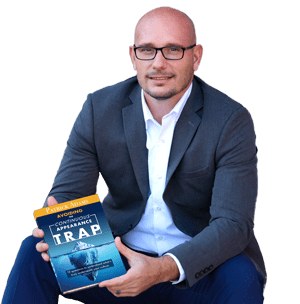
if people were interested in, I know that you have a book that came out about a year ago, like, is that going to be could? That be like a preparation to what you’re going to be presenting? Is it likely that your book, and if I think you have it right there, if you could hold that up, because I don’t the titles a little long for me, so I don’t want to, that’s right, making lean and continuous improvement work like it’s a super simple title, but, but is that?
Darren Walsh 29:20
Yeah, yeah, I try and keep things simple for myself. Shane, yeah, yeah, that’s, it’s all going to be, it’s, it’s, basically, is obviously the book came about because I kept seeing similar problems over and over again whenever I went in different sectors. So I wanted to start writing about these common pitfalls of lean. A lot of the common pitfalls are linked to daily management and bringing about consistency in operations. And that’s that’s the case whether you’re in manufacturing or in healthcare or in your local retailer and you. So that daily Lean management. So I get into, you know, daily Lean management, problem solving, the pitfalls of problem solving, the pitfalls of visual management, but also leadership and yeah, so I hope to be speaking around sort of a how leaders can, can make lean and continuous improvement work. There is a code. Patrick, so if anybody’s interested, is Darren 100
Patrick Adams 30:28
Yes, Darren 100 and anyone that’s interested can go to lean solution summit.com or find lean solutions.com and click on Global Summit, and you’ll be able to register there and then, like Darren said, use the code, Darren 100 and that will give you a discount off of whatever the lowest price is right now. So Darren 100 put that into the code section. That’ll give you a greater discount than what you’re getting already. And then, I just want to say too real quick. So those of you that have not been attended the Lean Solution Summit. We are very particular about the speakers that we bring to the summit. We we our speakers are speaking on real application and real case studies, real stories, real challenges. This isn’t theory. Darren didn’t just read a bunch of books and hear from people on what, what he wrote in his book, this is real application that he’s been involved with real challenges. He’s been in your position. For those of you that are listening, probably worked in similar positions and and so again, it’s when you come to the link station Summit. You’re hearing from people like Darren who have walked the walk, right? So, so know that and use his code, Darren, 100 and you’ll get a you’ll get a discount on the and we’ll also add that to the show notes as well. So just go into the show notes, you’ll find the link there, Darren, it’s been great to have you on great to talk with you. Excited to see you in September here in the US. And yeah, thanks again for the for the great insight into accelerating our Lean efforts.
Darren Walsh 32:03
Yes, thank you very much. Been a pleasure, guys. Thank you
0 Comments