



What You’ll Learn in This Episode:
In this episode of the Lean Solutions Podcast, hosts Patrick Adams, Andy Olrich, and guest Steve Riley discuss the importance of leadership behaviors in maintaining Lean initiatives. They highlight how unintentional actions, such as not picking up trash or not following standard work, can undermine Lean efforts. Steve Riley, a manufacturing operations leader with over 30 years of experience, emphasizes the need for consistent leadership presence, protecting standards under pressure, and fostering team-led improvements. They also explore the significance of measuring both leading and lagging indicators to ensure continuous improvement. Additionally, Riley introduces his company’s digital shadow board service, which simplifies the creation of tool organization systems.
Key Takeaways:
- Leadership behavior matters more than Lean tools
- What leaders do in the moment defines credibility
- Lean breaks when standards are optional
- Improvement must be part of daily work
Links:
Lean Solutions 2026 Summit
Steve Riley 00:00
What you say on the floor matters, and the way you interact with people is what people are watching, very easy to believe and lean and support it with our fun. People going to training, improve Kaizen events, celebrate the dashboards, all this kind of thing. Then we can damage it very quickly when, like you said, the things that happen in life, you’re under pressure, that’s the times that really undermine the system very quickly.
Patrick Adams 00:27
That’s a good point, I think about, like, as a leader, you’re out on the floor and, you know, you’re you maybe have some five that good 5s initiatives going or something like that. And you unintentionally, you know, walk past trash on the floor and you’re not even thinking about it, but they’re in that one behavior of stepping over that trash rather than picking it up. You know, people are watching. People see that. You
Patrick Adams 01:04
Hello and welcome to this episode of the lean solutions podcast. My name is Patrick Adams, and I am joined with my friend Andy Ulrich. Andy, how you doing? I’m great mate. How are you I’m doing well, living the dream. How are things down under?
Andy Olrich 01:20
Yeah, going pretty well jump back into the year and February already, and it’s still quite warm here, but things are going well, mate. And yeah, lots of good things happening. And just great that I don’t think you and I have been on a hosting duty together for a while. So yeah, that’s an even bigger win.
Patrick Adams 01:38
Yeah, no, it’s, it has been a little while I recorded with Shane earlier, and yeah, now I’m with you, so it’s fun to obviously have these conversations with each other. But yeah, sometimes we miss each other for a while because you’ve been with Catherine and Shane and you know, whatever, just haven’t, haven’t hit it. So No, like looking forward to catching up here. We have a really great guest for the show today, and I’ll let you introduce him in just a minute, but we’re going to have a great conversation, and then I’m excited to hear a little bit about some of the the business that they do, because I think it’s applicable for a lot of our listeners too. So we’ll look at that towards the towards the end of the episode. But Andy, do you mind introducing our guest today?
Andy Olrich 02:23
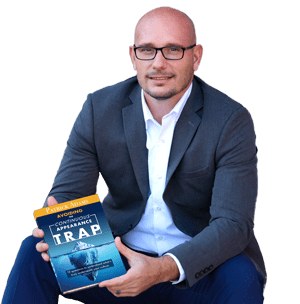
Absolutely, I can just let me get this. Okay, so today we’re talking to Steve Riley. So Steve is a manufacturing operations leader with more than 30 years of experience in improving performance, streamlining processes and building high performing teams. He had his Bachelor of Science in aviation technology from Central Missouri State University, and an MBA from the Jack Welch Management Institute as the chief organization officer at Bespoke. He helps organizations achieve lasting efficiency through custom tool solutions. So absolutely, Patrick, what you said about the tools and the systems to the support the tools I’ve got on the floor. But also, how do we What’s it? What’s a simple way to give us some of those things to get going? So I think, Patrick, if you could add Steve to the stage, welcome aboard, Steve. It’s great to have you on
Steve Riley 03:13
the show. Thank you. Andy, it’s great to be here.
Patrick Adams 03:15
Yeah, Steve, glad to have you here. Looking forward to diving into this topic. And I’ll just, I’ll just kick us off with with a quick question, if you’re okay with that. Dive into the content right away here. Andy. Andy gave us a good view of your background and your experience. And so my question is, you know, leader, in leadership, we have a lot of things that happen unintentionally. And so, you know, sometimes, in a lot of it is just based on the the day, the stresses that the customer calling quality issues, the the boss coming out, you know, whatever it might be, there’s a lot of things that happen to us. And because of that, there’s, there’s unintentional things that pop up. And so I’m curious, like, where do you see operations leaders unintentionally breaking lean, like, like, and when I say breaking lean, I mean like, they’re doing their best to support it, but unintentionally or unfortunately, things are happening that are causing it to break down or causing people to not have trust in in Lean being rolled out into their organization. Any thoughts on that?
Steve Riley 04:27
Yeah, absolutely. That’s a great topic, because that’s the real world that we all live in, in manufacturing and other industries as well. So I think to answer your question like one of the biggest ways that leaders can break lean, and they often do it without realizing it is by supporting the concepts in theory but then overriding them in practice. So what you say on the floor matters, and the way you interact with people is what people are watching. It’s very easy to believe and lean and support it with our you know. We’ll we’ll fund people going to training. We’ll approve Kaizen events, we’ll celebrate the dashboards, all those kind of things. Then we can damage it very quickly when, like you said, the things that happen in life, whether his production demands, customers, issues or whatever. So especially when, when everyday events happen and you’re under pressure, that’s the times that you can really undermine the system very quickly.
Patrick Adams 05:27
Sure, yeah, that’s, that’s a, that’s a good point, I think about like, even little things, like little behaviors, like you, you as a leader, you’re out on the floor, and you know, you’re, you’re, you maybe have some five, good 5s initiatives going or something like that. And you unintentionally, like, you know, walk past trash on the floor and you’re not even thinking about it, but they’re in that one behavior of stepping over that trash rather than picking it up. You know, people, people are watching, and people see that. And unintentionally, that could derail your, you know, your five. And I also think, you know, you grab a tool off of a tool board, but you don’t put it back. Or you you’re in a conference room, and they have a, you know, some standards for what the conference room should be, left looking like, like, you know, chairs pushed in, markers put back on the board, boards wiped off, and you walk out and don’t do that, you know unintentionally, that you know not, not something that you’re you’re trying to intentionally sabotage anything. But you know, those little acts, those small behaviors, can cause others to see that and go, Hmm, does he really or does she really believe what she says? You know, because we need to see it in the actions, right? Do you have any experiences with that?
Steve Riley 06:41
Or, you know, unfortunately, it happens all the time, right? So lots of examples of that
Steve Riley 06:48
where your choice in the moment will again undermine things. So, you know, classic example, you have standardized work on the floor. People are following it. We have a customer calling, screaming for some product they have to have. You know, if you’re if your message to the supervisors is, just do whatever it takes to get it out. We’ll fix this later. You at that moment, you have made it clear that Lean is optional, and then speed is what we reward, and that will completely bring your your system to to to an end, right? Very, very quick. Yeah, such a good such a good example. I think another way that leaders can, can can break Lean is by jumping straight to solutions for their teams. So you know, what we really want is the teams to be thinking for themselves, asking questions, experimenting and leading the change. And if leaders are stepping in, saying, here’s how we’re going to fix this, and it’s a top down approach that very quickly erodes the buy in to the program. And again, it’s just compliance. Hey, we’ll do what they told us to do, but you’re not seeing the system continuously improving. Is simply as good as how our leaders can make it to be. So that’s another practice that, again, behavior wise, leaders need to be careful of that. They are encouraged the teams to be the ones that are leading the change and building the system and not being a top down.
Steve Riley 08:15
Yeah.
Andy Olrich 08:16
So true, Steve, and definitely my intent is a warmed up already. It’s, those things that rewarding the firefighters. When that was one of the things we were told to stop doing that, and even though they were getting us out of the bind, it was, it was always about that short term urgency, long term consistency with Lean. And as soon as we’re under pressure and we don’t do the daily stand up, or people aren’t doing their Leader Standard Work, or even just, you know, letting others see it, yeah, piece by piece. Cheer falls away quick. So and probably a catalyst of leading you to what services you provide. Now, right? That’s those. We’ll get round to doing that, or we’ll get round to designing one of those things, and it just, yeah, you get caught in the busy, and it doesn’t happen, which then leads to more waste. So I thank you for those examples. But yeah, live, I think a lot of people will be thinking about that too. And another classic that’s especially more prevalent these days is around organization in the digital space and putting things with the right names in the right place, and how much time we waste looking for files or oops, we deleted that and nobody told us, or multiple systems for the same thing. So I’ll stop there, because, as you can tell, you’ve hit a nerve already. So it’s this is going to be great. Andy, I think
Steve Riley 09:28
one of the things you suggested, there is another one that’s important to talk about, is if improvement is treated as extra work and not just part of the work, that also is is the system that won’t be itself improving over time. So again, leadership behavior should be lean. Is part of our work, not just something we do when, when there’s extra time, because we know there’s never extra time, or there’s never a calm period just to go do that stuff, you got to make these things important, and that needs to be the culture of the company. So if you want. Lean the last you have to model it, especially when it’s inconvenient.
Andy Olrich 10:04
Yeah, it’s how we work around here. And and it’s not and lean, it’s and we had a bit of a bit of a proud moment somewhere where we had five years Fridays, because we’re getting that off the ground, and we had 5s Fridays, and one of the senior managers came in and said, what we only do 5s on Fridays. How quickly can we turn around? So it’s not an event or a special thing on the on the calendar, it’s, it’s every day and everything we do, yeah, the 5s Fridays. We thought we were really moving the needle there, but he saw that as a risk, and went, hang on. No, what we just Tuesdays is just turn it over, and Wednesdays is whatever. So it was really, yeah, really, really strong on that point. So if tools, so we talk a lot on this podcast about the tool the tool trap. So yeah, being distracted, or just going straight for the all the Lean tools, and as long as we’ve got all those, then we’ll be fine. You talked a lot already, a bit about behaviors and the leadership behaviors that we expect to see. So tools are part of the answer, but if they’re not, I just want to dive in a little bit deeper on this leadership behavior piece. So yeah, if tools aren’t the answer, they’re part of it. Now, what are some examples of how you’ve seen leaders increase or maintain those behaviors that the others need to see, like Patrick said they’re watching.
Steve Riley 11:26
Yeah, good question. Let’s say when lean actually sticks, it’s almost always, I mean, like 99.9% of the time, it’s because of leadership behaviors that you can actually observe. So implementing those as leaders and following those as part of our standard work is really important. So like one of those would be leaders consistently showing up where the work happens. So going to the gemba, not just to do audits or even worse, just there for photo ops, but they’re there to learn. So if the leaders really showing up and asking the questions about what’s making this hard to do correctly, and that kind of thing, it it leads to people not hiding the problems, but instead escalating the problems, and then lean becomes real. And because Leadership isn’t just inspecting, they’re bringing curiosity about what can be. So I think consistently showing up is a behavior again, you can observe it and you can you can implement it, and it’s an important one for how you how do you make it stick? Another one we always already talked about is you got to protect the standards even when you’re under pressure. So all of us as production leaders have had those events. Stuff happens in the world, and things go sideways, and those are the times where you’re really challenged about whether you really believe this stuff or whether it’s just a nice to have, and if you are supporting standard work only when it’s things are going smoothly, and you throw it out when it’s not that’s behavior that people see and and very quickly you will, you will not have a program that sticks day to day. So, yeah, lots of behaviors that as leaders, we need to model what we want and stick to it even when it’s hard.
Patrick Adams 13:20
Yeah, I love, love the the behavior side of things is is so important and it is leader. Behaviors really do determine that whether your organization is going to be successful or not successful in implementing lean or or deploying lean into your organization. But behaviors are also or can be very hard to measure if we’re looking at sustaining lean you know, we want lean to to have real measurable impact in our organization. Can we measure behaviors, or what is the right measurement of success when it comes to long term sustainment of Lean initiatives? Do you have any experience with that, or any personal thoughts on on what should be measured when it comes to determining success for for Lean implementation,
Steve Riley 14:08
I do Patrick is actually a topic that I that I love, love to talk about, because it is so important. I think that most lean rollouts tend to keep the same scorecard that they had before. So the metrics that are classic in production, whether it be, you know, cost or output or utilization, or on time delivery, or any of the classics that we that we have, those metrics are important, but if they’re the only thing that leaders watch, then people will do whatever it takes to hit the numbers, and that will break the system from a lean perspective. So I think for Lean leaders, as we roll out initiatives, it’s important that we be asking different questions that are really about the behaviors that lead to the results we want, and be measuring those as well. So some examples could be you. Are problems being surfaced early, like, how long did it take for that issue that was on the line to be raised? Or are standards being followed? So we talked about standard work earlier, when you go out and observe the line, are they truly following the standard work consistently, or is it being modified and slowly creeping over time away from that, and then things like, are the teams really raising issues and solving root causes? Are they just firefighting? So again, are we rewarding the firefight, or are we rewarding root cause corrective actions that are effective? So I think having those things as part of our mindset of how we set metrics is really, really important. So maybe we take the example of a maintenance team. So one metric could be uptime of equipment. That could be how you measure your maintenance team, how well they’re doing. That measure can promote the heroics of getting a machine back up and running again, I would say, propose an alternative and an additional. One would be what percentage of on time PMS are being done. So PMS are in place to make sure the equipment doesn’t break down and doesn’t lead to the heroics and the need to come back online. So having 100% on time PMS is a better metric than uptime of the equipment. Look for a measure that tells you the behavior you want, that leads to the results you want versus just the end results, would be the thing. And same thing like root cause. So, like we talked earlier about, trying to get to the root cause of corrective action, is measuring effective corrective actions is a better measure than these other measures of just output,
Patrick Adams 16:59
sure, sure, yeah. And I think some, some people would call that like leading and lagging measures, right? So, so it’s important to look at both, because those lagging measures are normally the ones like you talked about, more of the, you know, the those measures that show how the organization is performing over time, or how the team or the machine, or whatever it might be. But what are the things that we can get, that we can do that might prevent us from, you know, getting in the red on some of those lagging measures, you know, and I love what you said about think about the behaviors that you want that are going to give you the right or give you success in those lagging measures, and then start to get creative about developing some leading measures around those behaviors. I really like that. Andy, what’s your what do you guys, I mean, what kind of leading measures are you familiar with, you know, versus lagging? Anything specifically that that you think have been like, really good leading measures in comparison to lagging?
Andy Olrich 18:01
Yeah, so if we’re looking at like delivery or performance, yeah, I certainly agree with the one example that we did use a lot was the plan versus actual on preventative or predictive type maintenance strategies. So we were implementing Reliability centered maintenance as well. So it was really important that we had the leading indicator and the lag as a kind of a measure in the mix here, because, yeah, if we, if we were doing, let’s say, if we were kicking goals and we were 100% delivery on completion of PMS, for example, the performance was going down, or was saw to thing that would help inform our strategy, go well, we’re doing 100% of the things right, but are we doing the right things? So that was, that was, yeah, really resonate with that one and big fan of the leading indicators, and with some trending as well. So we might have a bad day, but we can see that larger picture will actually, over time, we are actually improving the performance. So let’s just work that thing out, but all these other things must be working so and then in the safety space, obviously, I am a passionate advocate of, well, some use 3s but like 5s as a safety or even a quality type leading indicator, I think that’s those good standards and structures in place that there’s definitely usually a correlation between how many incidents or hazards you’re picking up, you will have less if your 5s scores are sustaining or maintaining or improving. So yeah, a big fan of lead, but also some lags. So that’s and I think for a maintenance if we want to talk about or an operational leading indicator, I’m just trying to think of some of the more interesting ones that we’ve utilized to give us around behaviors, right? So we had a completion of Leader Standard Work tasks. We started measuring that to hold. So we’re measuring the output of the maintenance team for them going out and looking and taking care of their equipment. We use the Leader Standard. At work, auditing scores as the leadership. Are we going out and are we effectively looking after and interacting well with our people, which was kind of the, not in a bad way, but the equipment that we were charged with supporting and keeping in good nick? So, yeah, there’s a few things there. Love it nice.
Patrick Adams 20:19
Yeah, good. Good things to get the get the mind to start thinking and and working around those love it so. So that’s the challenge everybody is to look at the behaviors. Think about leading metrics that you can put around behaviors that are going to give you the the output that you’re looking to achieve. Steve, one more thing I want to talk about before we wrap up for the day. You guys build shadow boards, and I’m curious to hear a little bit more about that. So how did, how did you get into this? You know, obviously you’re, you’re a lean geek like the rest of us. But tell us a little bit about shadow boards and what you guys do with that.
Steve Riley 21:00
Yeah, yeah, I’m glad to Yeah, Shadow boards have been implemented in most of the facilities I’ve worked in or my career, and so absolutely believe in those and understand the value, how it reduces waste and reduces tool costs and all those things. So I wanted to set the shadow boards in my toolbox in my garage at home, but I didn’t want to go through the process of tracing out the tools and hacking it out with a knife like we’ve done so many times in the facilities, right? So I decided we live in a digital age. There’s got to be a way to do this without all that effort. And so we developed a process around taking a picture of the tools laid out the way we want, and then turn that into a digital file that we could go to a CNC with and cut, cut out the shadow boards. So I did that for my personal toolbox. And then after having gotten the process developed, just reached out to some of my five US and lean friends, and said, Hey, if I could convert a picture of your tools into a shadow board, would you be interested? And they’re like, Oh yeah, all day long, so that this turned into its own thing. And so that’s where, wow, he came from.
Patrick Adams 22:08
So, so if I opened up the drawer of my toolbox and I just took a picture with my camera and sent it to you, you could send me like a shadow phone that would go in there, or shadow board that you
Steve Riley 22:20
was very close to our process. We actually have put it on a contrast background. So oftentimes toolboxes are dark or whatever. So okay, so get a white sheet of paper, draw a rectangle the size of your box on it, throw your tools on there, shoot a picture. That’s what we use as input into our process, and what we ship you is a touch shadow board that’s going to drop in your in your drawer, and all your tools go in it. So the teams that are implementing this, you know, continuous improvement professionals and others, you know, love that fact that they can very quickly have a professional looking shadow board for all their tools that shows up and plug and play.
Patrick Adams 22:58
Love it. Love it. I might have to take you up on that one. I got a couple that still need a little work.
Andy Olrich 23:07
How are you with spice racks and Tupperware covered? Steve, I’ve got to be careful doing that at home. But I touched on before, right? It’s all jokes aside. Like that is one of the challenges I’ve seen when we’re deploying 5s is, if you don’t have that skill or capability in house to quickly kind of stand some things up and straight after the training or the Blitz or whatever you’re doing, it can kind of fade away pretty quick, and people start to put things back in on top of each other and things like that. So I think that’s a good thing to test out, and what a great again. Digital tools are an enabler. They help human and I think that’s good, if it just takes that bit of time out and we can just get a plug and play. So I’ll definitely be having a bit more of a look at that. So appreciate it.
Patrick Adams 23:56
And well, if Steve, if anyone’s listening in and is also interested to understand a little bit more about what you guys do. What’s the where’s the best place for them to go?
Steve Riley 24:05
Yeah, they hit our website, bespoke tool trays.com, and look there. There’s a explanation of the process there and how to place an order, as well as cost profile. Or if they’re interested in a I have a guide on how to implement shadow boards. If you’re interested, if they drop me an email at Steve R at Bespoke tool trays.com, I’ll be glad to just put, you know, guide or something in the bar there, and I’ll be able to send you out a guide on how to do it.
Patrick Adams 24:38
Okay, perfect. Well, we’ll drop those links or that link into the show notes. So if anyone’s interested, you can go right to the show notes, and you can click on that link and check things out. I’m sure you can find Steve on LinkedIn as well, if you’re there, otherwise, shoot him an email. We’ll put that in the show notes as well. Steve, it’s been great to have you on. Time always goes quick, you know, on. These episodes, but we appreciate the the input, and we’ll definitely take a few things away from today to to apply right away. So thanks again for being on the show. Thank you for
Andy Olrich 25:09
having me. It’s been fun. Good on you. Steve, thanks, Patrick, thanks everyone. See you next time
0 Comments