




What You’ll Learn:
In this episode, host Patrick Adams and guest Craig Tedrow discuss the importance of long-term sustainment in organizational processes. Craig shares his journey from resisting Lean practices to embracing them, emphasizing the need for leaders to involve employees and revisit improvements regularly. They highlight the significance of clear expectations, enabling action, and sustaining improvements.
About the Guest:
Craig Tedrow is an experienced Continuous Improvement professional with a strong background in the automotive, aerospace, and defense industries. Known for his ability to bridge the gap between frontline workers and organizational goals, he brings expertise in training coordination, process improvement, and team development. With an Associate’s degree in Computer and Information Sciences from Grand Rapids Community College, Craig combines technical understanding with a people-centered approach to leadership.
Patrick Adams 00:04
What about leadership when it comes to sustainment, long term? I mean, where? How does leadership play a role? You know, maybe even, let’s focus in on, like middle management specifically. I
Craig Tedrow 00:13
think a lot of times mid managers even team leads, depending on what the org structure looks like. Folks are put into a position because they’re good at what they do. Well, I’m really good at coordinating all coordinating all the colors and making sure that we get everything running, you know, efficiently and not not run this color five times. Let’s wait, gather up all this stuff. But I might not be a very good people person or or I want to take the and solve all the problems myself, right? So if we have a leader that realizes that, hey, I really need to be a coach. I need to be a trainer. I don’t need to just come out there and solve problems anymore. I need to involve the team to do
Patrick Adams 00:55
Hello and welcome to this episode of the lean solutions podcast. We are here in the Lean solutions studio with a special guest, Craig tedro, who has been with Lean solutions for quite a while. And Craig this is actually
Patrick Adams 01:09
trying to think the last time that we sat down and recorded an episode was probably a number of years ago, right? Probably four years ago, four years ago. So I have the privilege of interviewing one of our internal consultants, an amazing coach, a good friend, just you know, has been a solid rock here at lean solutions, helping so many organizations to transform their processes in the right way, looking for long term sustainment within their organizations. And that’s actually what we’re going to be talking about today, is how do organizations drive long term sustainment within their organizations? But before we dive into that, welcome
Craig Tedrow 01:50
to the show. Craig, well, thanks. Patrick, yeah, it’s good to be here in the new office. The space is great. A lot different than our other one, our other one were great for the time that we had it. It was a new place, but now you have a little longer drive to work. But not a big deal.
Patrick Adams 02:04
Yeah, exactly. But obviously, having a cool recording studio like this is is pretty neat, rather than all of our virtual which will still do some virtual recordings with people that are outside of the West Michigan area, but for those that are coming here to West Michigan and popping in to tour the new office, there will be an opportunity, maybe, to record a podcast while you’re here. So excellent in the new studio, which is kind of cool. So Craig, for those that are listening in, I kind of, I threw a little bit of an intro to you of, you know, just based on you and I working together for the last, you know, it’s been, I think, eight years or so, seven or eight years now,
Craig Tedrow 02:43
I think we met in 2013 or 2014 that’s when I started in the carbon fiber industry, where I met you.
Patrick Adams 02:50
Yes, right? Yeah. Actually, why don’t you tell our listeners? I think if they, if they were to go back four years ago and listen to our episode that we did way back, they they probably hear that the story. But how did we meet? Why don’t you refresh our listeners on how we actually came
Craig Tedrow 03:06
together? Sure, that is kind of unique. What I what I like about this story is it really talks about my first intro to lean, which I got, oh, I would say, back in the 90s, I started at a large office furniture company in Grand Rapids. It was a fantastic place to work. I started in the mid 80s, 1984 so that’s when I hit manufacturing. And back in the day, we used to batch manufacture everything. So we just, we built hundreds of this and hundreds of this, and we’ll sell it, right? And we did, but we moved stuff around all the time. We damage things. I mean, there’s so many things wrong with that, that approach, right? So then they introduced a lean to everybody on the floor. So I remember when lean came in. I don’t know what it was about it, I almost felt like it was being done to us. It was a fantastic company to work for. But just the way that I the way that I approached lean, was just like, stop adding more work to me. You know, you’re just coming in trying to tell me how to do my job. I’m the expert at this. I’ve worked so many positions on the floor, hanging a paint line, building drawers, building peds, which is a name for pedestals or a file cabinet. And so I did all these different positions. And it took a while to learn all those things, but then to have folks come in say, Well, you need to do it this way. That was where I think I put the brakes on, okay? I was not promoting lean, probably for the whole 27 years I was there. I was a good employee. You know? I still did everything that I needed to do. I take things very literally. So when it when it comes to that, I made sure that I did all that stuff right. But I was not really coming up with suggestions, coming up with ideas, coming up with improvements, things like that. Yeah. So if we fast forward a little bit, I’ll give the little bit of the condensed version so we can
Patrick Adams 04:46
get to our topic. Can I ask you a quick question? Sure, real quick. So Craig, what did that look like when they started to do Lean to you, when it was done to you, as you say, what was there rumblings among the like, frontline employees about, like, what is the stuff that’s going. Coming out, did they put you in a classroom? Did they come out and coach like, what exactly did it look like when it was
Craig Tedrow 05:05
rolled out? You know, I don’t remember a lot of the classroom if there was, because I think if we would have went in and talked about topics related them to everyday life, which is what I love to do, then people can start to see how all this, this does help me, right? So I think what had happened, if my memory is correct, and this was a while ago, but they would come out to the floor and say, All right, why don’t we do it this way? This is how we can signal when you need to produce something. And they started pretty much just telling us how to do these things. And I remember it was met with a lot of, oh, this is a flavor of the month, or what are we going to do next month? Here, let’s 5s our table, and let’s, let’s put marker around our ink pens and our coffee cup and the phone and write phone. This was when we had the big phones on the Yes, that’s right. Back then to ashtrays. We had ashtrays. You had to mark where the ashtrays. Well, we did, because we were being pretty sarcastic. So yeah, we thought, oh, this will be fine. We’ll just label everything, right? Sure. So I just wasn’t on onboard the train of lean, right? So to fast forward a little bit, I ended up taking a buyout after having working there 27 years. I wasn’t quite 50 yet, so my wife and I said, you know, why don’t you go back to school learn something new? So that’s what I did. In 2011 I left the company that I worked for, went back to school, full time student. I really enjoyed doing that. Yeah, I went for computers. So if you have any any help with things in this room, you don’t want to talk to me. Yeah, I am terrible at computers. And you know, this just from our six years of really working together, right? I carry hard, dying cables with me all the time. Just, I don’t like the Wi Fi, right? It always messes me up, yeah? So I go back to school, I come out of out of the with a degree in computer networking, and it’s like, I’m really not good at that. So I went back into manufacturing. So what do I know? Right? So I went through a temp agency in 2013 I started with a group of folks at a carbon fiber company in Walker. We were making the Corvette hoods, roofs, rockers and splitters and some body panels. I love cars anyway, so it seemed like a good fit, right? And it was 12 hour shifts. It was a very dirty job. I started on the raw line, which is where they put all, almost all new people there, sanding raw carbon fiber. Excuse me, sanding raw carbon fiber so I’m covered in dust, you know, head to toe. It was a dirty job, but I enjoyed it again. I enjoyed being in manufacturing, right? And then they had asked for some improvements at this company. Hey, does anybody have any idea what we can do to make your day a little bit easier, right? So I’m starting to think to myself, well, I hide my sanding block under the under the line all the time so I can find it the next day. So maybe some tool boards would be nice, right? We have these big banquet tables that all our supplies were brought to, maybe we could have where our sandpaper is in an area, our aprons are in an area, our sleeves are in the same area. So we can get started a little bit faster. So I turned in a few of these suggestions, and a couple days go by, and then I have a tap on my shoulder. I’m out working on the line, and this person says, Hey, I’m the CI manager here, and would you like to work with our team and implement some of your suggestions? And that was, I think, the first time that the fire was really lit under me for Lean. That really got me excited about it. I remember going home and telling my wife, hey, they’re asking for my ideas. They also want me to come in and get some overtime if I want to implement my ideas. Sure. So that was super exciting. Craig, how was
Patrick Adams 08:26
that different from the other company? When lean was rolled out? Did they not ask for suggestions? Or was it just maybe more, just you need to do this? Or what was their approach there?
Craig Tedrow 08:38
Well, they asked for suggestions, and I remember when you turned in a suggestion you got, I think at the time, it was a small monetary gift, I think $25 Okay, and then that was taxed as discretionary income, so we kind of figured out what that was. So it’s like, All right, I’ll turn my idea and I get $17 right? Something like that, yeah. So again, it wasn’t, it wasn’t taken very good by me, as far as turning ideas in that way, sure. But when this continuous improvement manager came out and tapped me on the shoulder, it was like, that’s what got me more involved in it, because I was actually offered some overtime to come in and work with folks. So my ideas exactly so they I could see it through to that’s how I want the tool board to look, or what I think we can always change it right? Another thing we had to record the serial numbers of all the hoods. So I thought, let’s, let’s weld a stand at the end of the line, put it on a 45 degree angle so people don’t use it for drinks. And we have a clipboard there. And then I, whenever I have to write the serial number down, I can just write it down. It’s right there. So the ideas were very simple, very basic. Well, the funny part about that was that continuous
Craig Tedrow 09:39
improvement manager was you? Yeah, so to know the end of the story. Heard that story before.
Craig Tedrow 09:45
But what I like about that story is, you know, it’s 100% how it happened. I think you said I was training somebody when you went out there to do that, I did. Like training folks. I liked having folks feel at ease when they’re working on these expensive car parts. Right? Yeah, because it was, it was, it was a nice thing. It was nice to be able to to see a car in the road and say, Hey, we made
Patrick Adams 10:05
that. Yeah. I think that was the point that I remember, because I remember walking into this area where the sanding was happening, and everybody was hard at work. And I remember you were standing, I think, next to someone more, coaching them and teaching them. And I was listening to how you were coaching, and I remember, like, thinking to myself, like, why don’t we see more of this? Like, this is what we need, you know, out here, we need people that understand how to properly coach someone, and that are, they’re willing to do it. And so I said, you know, I think I even asked, like, Who is this supervisor? You know, what’s his name, or whatever? And they were like, no, he’s a, he’s a frontline worker, like, he’s, he’s, he’s just stepping off of his pedestal, and he’s, you know, helping this other person out, you know, out of his own, just wanting to help out, right? Like, man, we need, this is what we need, you know, people like this. So that was pretty amazing. It’s
Craig Tedrow 10:56
funny you say that because, and I say this to a lot of folks too, it doesn’t matter if you have leader in your title, yeah, you can still be a leader, right? So true, because I followed people at the first company I was at, there’s people that modeled good behavior, some kind of just enough to get by, yeah? But what do I want to do? Do I want to model some behavior, right? Right? So everybody can be a leader, whether it’s in your title or not. Yeah, right? And that’s what I like so much about lean too, because everybody’s ideas count, right? If you follow through with that, that’s so and that was something that that this company did. And I remember coming in, you’d said, here’s a here’s a spot to set your computer down if you need it. You know, I brought my computer. I don’t know why. I just thinking, Oh, I got to do this, right? I’m going to work with this team, continuous improvement team. We went out, did a gimbal walk. You had those regularly. I remember going with with the team that you had just to go out and talk to folks on the floor, how are things going, checking in with people, not to let almost to our topic, not to let some of these improvements just kind of fall away, right, right? To show that they’re important. Yeah, but that was a turning point for me, and I love that story, because it’s true, and it just got me so excited about Lean, yeah, and I’m still married. It’s 30 some years now. I can’t label anything at home anymore, yeah, but I, but I do a lot of 5s in my garage, yeah? Clear totes. Get rid of the totes you can’t see on anymore, because the labels never mean the same thing. So anyways, all these little things I do at home, yeah, you know, well, it becomes a
Patrick Adams 12:22
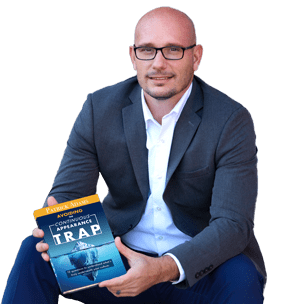
part of who you are. And if you’re, if you really believe in it, if you’re really genuinely understand that you know how it works and why it works, and you know, that’s when it you really start to get the benefits of a true having a true continuous improvement culture, is when it’s the people are so passionate and they’re genuinely interested and want things to change, you know, that’s and you start to see it in your in your personal life. And I think that’s, that’s really the key, one of the things that I stand behind, there’s, there’s really three areas for, you know, the in the book that I wrote a few years back, there’s two companies that I, that I talk about, and one of those companies had a true culture of continuous improvement. And there were three areas that they, that they were very passionate about. The first one was establishing clear, a clear understanding or clear expectations for team members. What are the expectations? What are you asking of me? Why do I need to do this? You know? Why is it important and helping them to understand truly what’s expected, right? The second one is an enabling action, and this is the one that a lot of companies struggle with, because they’re like, they’re just so busy. They’re like, how do we find time to improve? You know? And And my response is, how do you not have time to improve? If you don’t do this, you’re going to fall behind, you know? You have to figure out how to enable your team member members to take action. And then the third one is sustaining the improvements. You have to have a clear plan on how you’re going to sustain those improvements. So you talked briefly just a minute ago about the enablement, right? So at at this company that you and I were at, they told me the same thing. They said, We don’t have time to take people off the line. We don’t have time we we got these orders that got to be and this was an automotive tier one manufacturer, so it was like, how do you get people to be engaged and involved in the improvements? But you can’t take them off the line, you know. So that’s where we had to get creative. And, you know, well, I have a budget for some overtime, so let’s pull, you know, offer that to some people, see if they’d be interested. And obviously you took that and said, Yeah, let’s do it, you know. And that was the only way that we could implement those improvements at that time. Funny thing is, you know, fast forward a few months, maybe a year, two years, we started to open up availability during the work day, because we were able to remove a lot of the wasteful activities that we were doing, which caused us to have to do it on overtime. And now we started doing it during regular time. But I say all of that because I want to get to the third point, which is sustaining improvements, which is what we’re going to talk about today. So when it comes to sustainment, you know, you’ve worked not only at that company, you know you spent almost 30 years in another company, but since then. And in the past six years, I mean, you’ve worked with hundreds of companies in helping them to deploy Lean principles and get a clear understanding of, you know, what the expectations are when it comes to developing a true culture of continuous improvement. You’ve helped them get creative about how to enable action, and you’ve also helped to create really robust sustainment plans for organizations when it comes to continuous improvement. So the first question that I have is, you know, lot of times what I see when we go into organizations is they get really excited up front, you know, they they have leader buy in, you know, maybe they bring in a third party like us, and they’re excited. They’re energized. And you know, for maybe, I don’t know, nine to 12 months, there’s a lot of really, really powerful things that are happening. But then after 12 months, it almost seems like sometimes things teeter off. The momentum gets lost. The excitement kind of gets drained. What are some ideas, or some, maybe some real things that you’ve been able to do to help get past that. Because this is a long term commitment. Lean is a long term commitment. It’s not something that you’re you just spent. It’s not an event based redo one or two events. It’s not where you just, let’s work on this one for six months and then we’ll, you know, create some other methodology that we’ll bring in no Lean is a long term engagement. It’s embedded in your organization. So how do you get past that one year? What are some strategies that you’ve used to really help people to sustain improvements past year one
Craig Tedrow 16:36
well, first of all, and this kind of goes back to what you were saying a little bit ago as well, when we want to have an improvement, what I always thought back in the day, you know, long time ago, was we’re going to improve this. We’re going to create a little bit of extra time in our day. It might take a little few seconds less to do this task. They’re just going to pile more on our plate. So that’s kind of how how we looked at it, right? And it’s like, explain to folks why we want to do this. We want to remove some steps out of here so you’re not rushed all the time, right, right? We want to have everything you need so you don’t have to run grab the casters you need for the bottom of this unit, or the right sandpaper for this because you’re, you know, because you don’t have enough at your your space. So by doing that and making that a part of your life, it actually makes the day easier. So, so that’s one thing. I mean, that’s a big part of it. Let people know why they’re doing what they’re doing what they’re doing, right? Not to just give you extra work, right? This might give you an extra five minutes to clean up at the end of the day, which would be awesome, you know, if we could have that too, because you want to give people time to clean, especially how dirty we were working with a carbon fiber, right? You want to make sure you have time to do that. But a lot of times, these things are events. They’re treated as such. They’re, they’re very exciting in the beginning, back when we used to do five day kaizens, you know, you’d have leadership kickoff and training and pizza and donuts and pizza and coffee and everything. I mean, everything was was given to us, right? For these it was a great thing. And then it would, it would fade off. Sometimes a year is almost being generous, right? That things are going good, right, right? So what we can do when we want to embed this into our culture is show how important this was, or how important it is next week and the following week and the following week. So get out there if leaders can put this in their Leader Standard Work, if they’re using it, which I hope leaders are just as a note taking and reminders. Hey, I’m going to go out and check that line. You know, we improve the Dodge Viper refinishing line, but I’m going to go out there and make sure it’s staying the way that the folks wanted it right? Because the team came together decided how they wanted to do it. We’ve got to make sure and give it a chance. So put that in your Leader Standard Work. Go out there, keep revisiting. Say, Hey, how you know? I know we did this Kaizen a few weeks ago. How are things going today? Are we still holding up, right? Are we still holding up our end of the deal, too? If we promise some fixtures, some tooling, different things, did we get that to you? We don’t want to take our foot off the gas after that first week. Then everybody really gets that. Oh, it’s the flavor of the month. Here we go again. I’ll do the next guys on. Never mind. I’m just going to go back to how we were doing it before, right? So get out there, you know, double check that people are doing what they wanted to do in the first place. And that’s the other key thing. It’s not what the supervisors think we should do, or the managers, it’s what the folks that actually do the process. Hopefully they were totally involved in the Kaizen or in the improvement process. We did some interesting ones, where instead of having a week long Kaizen, we had a five hour case on so we hit a lot of big ticket items that were important for folks, but we walked away with a very small action list things that we could get done right away and make the process better right now. Sure. So that was another way that we could do some of those things too. But I think revisiting it is so important, because when we don’t, we’ve just, we’ve just, we’ve taken our eye off it and say that’s not that important anymore. Yeah. And I like to say sometimes when continuous improvement is running good, it can be kind of boring. But I like my plane rides boring too, you know. I like that the pilot does the checklist and does all of these simple, basic things. And if you asked anybody in an airplane, you know, we’re. In a hurry. Would you mind if the pilot didn’t do his checklist? I don’t think anybody would say, Yeah, that’s fine. Let’s go. I’m always like, hey, take your time. Yeah, yeah. I remember on a plane once, we were waiting for the pilot to get there, and I thought, boy, I hope he’s not rushed and all, you know, frazzled like I would be if I was late, right? People are sitting on a plane, right? You know, give him a cup of coffee, tell him to take his time and do is checklist. So I think those things are just super
Patrick Adams 20:24
important. Yeah, so important. I think that’s a great, great example, for sure, too. Because a lot of times we do get things get chaotic. We’re got customers calling. We get, you know, quality issues, whatever it might be, you got to fall back on the the important things, the inputs, as we say, that are going to give you the results that you’re looking for. And if you just start skipping over those, then you’re living in a complete, unstable, chaotic mode, and that there’s no way you can improve in that mode. So I think that’s a really, really good point. What about model areas? I mean, do you use the concept of like a model area to start and, you know, do you is there a way to keep the momentum going? You know, after you get past that at
Craig Tedrow 21:10
all? I think, I think using a model area is a great way to do that. You know, instead of being, I think it’s like a mile wide and an inch deep, yeah, or something like that, you know, let’s really go in and commit to this area. Really make an improvement, make it like a showcase. Sure involve the people you know, still definitely that improvement with folks that do the job. There was something that my mentor had always told me, and this was after you had left that company. I actually became the CI manager at that company, and we were growing very fast, right? So this mentor that I had one thing that was super important with this person, and he always told me this, get out there, talk to every shift before we make a change. So I would go down there with an easel board, set it up, and I would typically meet with third shift first, because I’ve worked all shifts second and third, and I know what it’s like. Sometimes they feel, you know, like they’re left out. Yeah, and it’s just, it’s just the nature of the beast. In the middle of the night, there’s not as many people around. So we met with them every shift with that easel board, and said, write your ideas on here. This is what we want to do in this area. With your help. We can’t do it without you. So then we get the whole team involved. We take this model area, we get it flowing the way they want it to. Maybe it’s a 5s event. Maybe this area was totally cluttered, and we treat that as, hey, this is what good looks like. So we can take people to this area. I was at another large company in Holland, and they did this model area where this this team lead took her team to watch a startup meeting. They were not doing startup meetings in this area. She took her team over there and said, Hey, let’s watch a startup meeting. And the team watched that, and they thought, this is really cool. They’re going over what their numbers are for today. Who’s leaving early? If anybody is anybody that has any special issues, maybe problems they had yesterday. And she showed that to this team, they went back and recreated it in their area. So I think it just shows how powerful model area can be. People go and see it, and they’re like, Hey, I like this, right? This is what I want in my area, because my area is a mess, right? Yeah. So go in and work with the folks, and then keep checking on them. You know, if you write it in your leader, standard work, I’m going to go out and check on that process that we approved, just to make sure that people are improving
Patrick Adams 23:13
that, yeah, for sure. And the other thing too is, you know, after say, you know, whatever, six months, eight months, once you’ve kind of worked through all the learnings in that area, and now you can take one or two of those people, bring them to another area, or, like you said, Bring people over to that area, and now we start replicating that across the across the site, across the plant, to other areas that you know that are that we can make our next model area, and so that, that duplication of the learnings, then, you know, you start to get this momentum. And it’s like, you know, the first model area, you’re like, pushing the the rock uphill. And by time you get to the top, you know, and you start other people see the learnings, they experience, the the excitement, they see, the improvements and the metrics. And now there’s a opportunity for that rock take at the top of the hill. And now it’s like the momentum is there. And, you know, you just capitalize on that. And for sure that that can help with sustainment long term as well. What about leadership when it comes to sustainment long term? I mean, where? How does leadership play a role, you know, maybe even, let’s focus in on like middle management specifically. Obviously, we need to have upper leadership engagement. We need to have their buy in. We need to have their them removing roadblocks for us. But when it comes to middle management, the people that are out there, you know, maybe at the model area or out there, helping to train and coach, or whatever it might be, how important is it that they’re engaged? And maybe, if you have any thoughts or ideas about how anyone who’s listening, who’s a mid manager, what advice would you have to them? That’s
Craig Tedrow 24:51
a great question, because I think a lot of times mid managers, even team leads, depending on what the org structure looks like, folks are put into a position because they’re. Good at what they do? Yeah. So I could be really good at coordinating a paint line. Now, all of a sudden, I’m in charge of a paint line, right? Well, I’m really good at coordinating all the colors and making sure that we get everything running, you know, efficiently and not not run this color five times. Let’s wait and gather up all this stuff. But I might not be a very good people person, or I want to take that and solve all the problems myself, right? So if we have a leader that realizes that, hey, I really need to be a coach, I need to be a trainer. I don’t need to just come out there and solve problems anymore. I need to involve the team to do that. Maybe reference some back projects too. Remember how in the model area, you know, we interviewed everybody that does that process. Let’s do that over here. Let’s talk to those folks and find out what’s making their job hard or what’s making it easy, right? What are they like? What can they replicate there, too? So I think sometimes we look at managers or team leads and think we put them in that position, they’re going to be a great manager, a great team lead, because they were great at running that machine, they’re great at coordinating that paint line, or great at finding parts and getting units out the door, but they might not have those skills, as far as to be a coach, to be a trainer, and it’s kind of hard to sit back and watch somebody try something, even though we might know that it’s probably not going to fix it, but if we have time and let them experiment, then they can know all right, that way is not going to work. Let’s try it this way, right? So I think you know being a coach is super important, and then then to be relaxed when you’re out there, like, if you are training somebody, that was something that I thought was really important, depending on what parts you’re working with, some of the parts we work with were pretty expensive, right? And we have people just like me. I was hired in through a temp agency, and I’m a little bit nervous, you know, putting a stander on a on a Dodge Viper, right? How is that going to work? So I think middle management team leads, their role is just vital, and there’s some great, great ways to get out there and improve that too. You know, if you need to work on those skills, there’s things you can do to improve that too. Yeah, that could be a whole nother topic.
Patrick Adams 26:51
Well, you touched on it a little bit with Leader Standard Work. But, you know, we as leaders, as team leads, as mid managers, you know, we, we ask our our employees to follow standard work, you know, but yet, many of us don’t have our own standard work for what we should be doing as leaders. And I think, you know, that’s a really good starting point for any leader that’s listening is, you know, just asking yourself, what are the inputs that are, that are necessary in order for us to get the outputs that we’re looking for? You know, gamble walks. How often should I be doing those audits? You know, audits of standard work, audits of 5s you know, coaching time, like actually blocking time to go out and coach. I mean, these things are so important when it comes to ensuring that you’re developing the right culture of continuous
Craig Tedrow 27:37
improvement, right? And I think as a new leader, if you were promoted to that, you might think that, boy, I can’t spend, you know, an hour just going out and talking to people. I need to be out there producing or doing something, but that is that is producing, right? Or you’re producing good employees that can think for themselves and showing that respect. I think being a good listener is probably one of the best skills that any manager team lead can have. Go out there and talk to folks and actively listen, active find out, find out when
Patrick Adams 28:04
they’re really interested. For sure. Yep, yeah, that’s a great, great point for sure. Let’s talk about you mentioned events, Kaizen events, specifically. And Kaizen events are definitely important, and can get get us, like, very far, very quickly, in a short, you know, in a short amount of time, we can move the needle very far. But what about what would your thoughts be on systems versus versus events? Like, do we just do events, or are there other things that we can do when it comes to like systems or embedding continuous improvement into the way that we do things? What
Craig Tedrow 28:41
are your thoughts on that? I think if we just do events, like you even mentioned earlier, like, all right, we’re gonna do four events a year. You know, that might sound like a great strategy, you know, at upper level, but if we don’t build these, these habits into our everyday life, it becomes just an event. It’s like, Alright, here’s Christmas. All right, then wait till next year. Well, we can’t do it that way. We need to, we need to have these habits built in. And I think about, I’ll go back to my garage five messing my garage. I have wire racks now, clear totes for everything. I remember being out in the yard with a with a clear tote, all my sprinkler stuff, the washers and and things like that. And these are just above ground sprinklers, but they need a little bit of attention, right? Sure. So I went in the house for something, and when I went back out there, I couldn’t find my screwdriver. So I’m thinking, what would I do with my screwdriver here? I’m all organized, right? So I thought, Alright, I’m gonna go back in and grab another one. So go to the drawer where I keep the screwdrivers. And sure enough, the screwdriver was there. So I had, subconsciously, I guess, put it away right as I was walking in the house to do something, I remember I was so excited that after, I don’t know how, many times of leaving it out and just muscle memory, it just kicked it. I don’t even know I did it, right? It’s like, putting my seat. Bet. I don’t remember doing that this morning, but I know I did, yeah, so I remember I was so excited. It’s like, Hey, I just did this on my own. I go in and tell my wife, she looks at me like, that’s That’s great. That’s really nice.
Patrick Adams 29:58
Greg, you should have called me. I. Yeah, obviously, Lisa, your wife, is an amazing woman. You know, there’s just something different about us continuous improvement nerds, that exact gets us excited,
Craig Tedrow 30:13
yeah? So just, just for me, you know, doing that without even thinking about it. And that’s what, that’s what I think Lee needs to be. And then when I go out in my garage and I know where something is, yeah, I absolutely love that, because I’m not wasting time looking for it, right? So one of the most exciting things to me is when I have somebody, whether we’re doing some training it, when they come back and they say, Hey, I rearrange my laundry room, or I rearrange the pantry or something, when they take this and do it in their home life, yeah, to me, that really cements those habits too. It’s like this just makes sense to me. Yeah. I mean, no one’s gonna go run errands and drive to a store and come home and go to another store and come home, and I know it’s very basic, you know, example, but you’re gonna, you know, do it in a sensible way, right? And think about, you know, things that we do at home that way too. So whenever we can tie those things in with a class and let them know. Oh, I guess that does make sense to do it that way. Then you’re going to free up some of that time, right? You know, because you’re not searching for that stuff that’s right, yeah, or buying another another screwdriver, right? So then to find the ones you
Patrick Adams 31:14
have, yeah? And that actually leads me into my next question regarding employee engagement, because there are some signs when you go through facilities and you’re just taking a walk tour, you and I do this a lot, where we just go to our facilities and spend time asking questions and what, what signals good employee engagement when you walk through a facility. Are there any sure fire signs where you’re like, Man, these these people are excited about continuous improvement. What do you think anything?
Craig Tedrow 31:45
Well, yeah, I think when, when you see people talking and coaching others, which I’ve seen, that actually more often than I thought I would see somebody showing somebody how to do something. So it’s like, look, they’re they’re taking that on. They’re being a leader, almost, right? They’re not waiting to find someone to go, oh, go ask somebody else. They’re stepping up helping with that. Another thing I like to see is, is folks that, you know, sometimes I’ll hear, Oh, we don’t need standard work here. You know, everybody knows how to do the job. And then we’ll look and on the machine, there’ll be a piece of paper stuck there, and there’ll be a little red arrow, or a green arrow, like, Hey, turn the machine to this setting, or something like that. Yeah. It’s like, you know, I think, I think folks are actually asking for some standards here, because they’re writing them themselves, right?
Patrick Adams 32:25
I think about the same thing where you see, like, someone will print out, like an instruction, or they’ll write something and then tape it on there. I’m like, they’re, they’re asking you for visual instruction.
Craig Tedrow 32:35
Yes, they’ve just done, and they’ve just done a great improvement, right? Right there? Yeah, they’ve taken the initiative to do that, right? So when you see people that do that, and then point that out to others and say, look, I think you guys are asking for it. You know, you’re not really formally asking for it, but we can see that when we go in there, yeah. So I just think that’s important. And I also like to talk to the operators. I mean, if Sure, if there’s time, obviously you’re in some facilities, and you can’t just pull people off the line at any time. But if you do ask them a few questions, and they generally get excited about it, sharing it, and that someone’s listening to them, yeah, that’s another thing that folks, I think, are ready for it, right? For sure, I like to think about people that want to pull lean, you know, let’s not push lean on people. Let’s let people pull lean and get excited about it. Yeah, I saw that model area over in the PED cell. Can we do that over in the you sell? Maybe, yeah, you know. Then you get people start asking about it, right? Then, you know, you’ve got something right, that’s right. And then when people know that, hey, the improvements going to make my day a little bit easier. They’re not just going to dump a bunch more work on my plate, yeah, because nobody wants to make an improvement that way, right? Why would I? Why would I improve this process? They’re going to make me do 50 more units now. Yeah. Now there comes the point where, when we make so many improvements, well, sure we’re going to free up capacity, you know. So that’s a great thing, so we want to do that, but we make a few improvements and let their lives be a little bit easier, you know, maybe they have more time to clean up at the end of the day. Maybe they won’t rush so much, and they’ll be able to double check apart or or make sure they’re not rushing through something generally, quality is better. You know, when people are don’t feel pressured and under the gun. You know, I hate to design a process that, you know, only a young athlete can do, because we don’t have folks like that out there. I got to think about myself, you know, can I, can I do that at my age or or can more my wife do that? Right? So design processes like that,
Patrick Adams 34:19
yeah, yeah. That’s so, so important. You touched on a little bit of, like, the, you know, 10 cycle time study, where, you know, if we’re creating standard work, we’re not going to just take the fastest person’s time try to make that the standard. We’re going to look for the lowest repeatable, the ability for us to repeat that multiple times, but the lowest repeatable, set that as a standard, and then try to, you know, push people a little bit from there, but it’s important that we take into consideration everyone. We don’t just set the, you know, set the standard based on the fastest, strongest person
Craig Tedrow 34:51
that’s out there. Exactly, yep. And I remember when I was in upholstery, there was a woman next to me, and I was new to this line, and I had to upholster this. This cushion before it went on a chair. And and I’m struggling. I mean, I am just, I get it where I think it’s all set, I get the press down. I I pull on the drawstring, getting ready to staple it. And all the fabric goes underneath the cushion. So I got to pull it out and redo it. And I look, look next to me. And this, this woman is just effortlessly doing this, is this upholstery work. And I thought, Man, she is, she’s got something there, right? Yeah, so she, she told me a few tips, what to look for and and while I’m struggling, she’s passing cushions behind me. She’s doing double the work, almost just to keep the line satisfied, right? Because I’m starving the line. She showed me those few things, and it made my job so much easier. And it’s about her, you know, I looked at her as a leader, right? Can you help me out here? Right? And she did. She had no problem with that. Oh, that’s amazing. So I think that that’s just the kind of culture that I think is really nice, yeah. And there were so many people like that. You know, with my 27 years that I had at that, it was fantastic,
Patrick Adams 35:57
right? Yeah, always good people. People come to work they want to do a good job. They do, unfortunately, so many of them are working in broken systems, and so that’s a big part of what we do. And obviously systems is one way that we can sustain continuous improvement long term. But as we kind of wrap up here, what would you say? Give our listeners, maybe your top three. What are three areas that we should be keep in mind as we think about sustainment. You know, how do we get past that first year? How do we continue long term, to keep the momentum, to keep the engagement, to to continue to show results when it comes to continuous improvement? What would be three of your big
Craig Tedrow 36:38
hitters? I think one is to revisit the reason we’re doing this in the first place. So if we’re doing, if we’re going to try to make a process, you know, a little smoother, to free up capacity, maybe we want to get some new orders in, right? Let people know, hey, we’re looking at getting new product in here. We want to make this better. So, so revisit, you know, the way, the reason that we’re doing doing it the way that we are now. I think another one is, is investing in saving those few seconds too, right? Go out there, have folks make their job just a little bit better and celebrate those wins. You know, if we had to build a pet, I think it was 4049 seconds, something like that. If we trim that down to 45 and we’re doing 725 of these a day, that’s freeing up, you know, a little bit of time there. A little bit it does. It does add up. And then I think visiting that model area, go look at that area again. Why are we doing this? Right? This is what we want this area to look like. And then I guess I’ll even throw a fourth one in there. Add it to your leader. Standard Work. Make a note of it. Go out there and show the folks that this is important. Hey, we did this three months ago. Is this still working out okay for you? Just ask that question, you know? And then they’re thinking, Oh, they’re showing me respect. They’re asking if I still like it, if it’s still working out right, or if I could change it, because it’s always fun too. When you go into a place and everybody rearranges things and they think, Oh, this won’t work. It’s like, well, let’s just try it, right? Yeah, at the end of a couple of days, it’s like, would you like us to put it back the way it was? Because we can do that, right? And most everybody’s like, no, we’ll give it another week, right, or something like that, right, right? But because I know that we did make some improvements, yeah, yeah,
Patrick Adams 38:13
no, that’s huge. Really, really good advice. And obviously we could talk forever about, you know, this the so many years of experience and the different things that you’ve been involved in, if so, obviously, I mentioned this at the beginning, but you’re one of our Lean solutions here. You’re one of our top consultants, our top trainers. You know, you’re out there working with companies in all different industries, healthcare, government, medical device, manufacturing, nonprofits, yeah, nonprofits, if anyone’s listening in and they’d be interested to talk with you about training or coaching, anything like that, what would be the best way for them to get a hold of you?
Craig Tedrow 38:53
They can hit me up on LinkedIn. You know, let’s connect on LinkedIn. Sure, that’s one way to do it, go to fine, lean solutions.com, you know, schedule a call with any one of us. I love going into these different companies and the different different industries. Yeah, because, and I’ll never forget this. This happened a few years ago. You landed in Portland, Oregon, and I landed in Portland, Maine on the same day. Oh, yeah. And I think you were working on pizzas, and I was working on covid test kits. Yeah, it’s like, what do I know about covid test kits and laboratories? Right? I didn’t have to know. The people know, yeah, you just need to get in there and get them talking amongst themselves. What’s going to make your job easier? And then, you know, don’t let folks think, Oh, you’re just, you’re just blowing smoke, right? No, that’s really how it has to be. We have to get the folks involved. And that’s something that I do. Like our approach. It is involving. It’s involving the operators. You know, if we can involve them, get them to think that, oh, Ling’s not such a bad thing. It does make my job better. And I’m not just going to get dumped on, you know? I love that when somebody it’s the old cartoon where. Finally get their inbox, you know, cleaned up, and then some big bulldozer dumps a bunch of stuff in it. Again, how? I mean, how defeating is that? Right? It’s not that’s not the reason to make improvements, just to make people work harder, right? But it could be to increase capacity, you know. And hopefully your company is sharing that, Hey, you want to get some new product in. We want to make this process a little faster so we can add some new product to your line, right? Yeah, most people like to hear that kind of stuff. Oh
Patrick Adams 40:23
yeah, for sure. Yeah. Well, Craig, it’s been great to have you on I have the opportunity to see you in the office just about every day when we’re when we’re here, but I do appreciate you giving some wisdom to our listeners, and you know, just all the work that you do for our clients, we just so much appreciate you. So thanks. Thanks thanks for being on
Craig Tedrow 40:41
the show. Absolutely All right. Thanks, Patrick
0 Comments