Not many people wake up in the morning and think to themselves, “I want to make some mistakes today.” There also aren’t many people who come to work and say, “I’ll sabotage the work today…I’ll cause some real problems.”
Yet too often, blame can be placed on the individual, when it really needs to be directed at the process.
As a leader of your organization, you need to truly believe in this statement: People come to work and want to go a good job.
Now, ask yourself why? If people come to work wanting to do a good job, then why are mistakes made? Why does it sometimes seem like complete chaos with so many problems?
Here is the answer: Its the process, not the people.
We really need to ask, “What is broken in the process that allows this mistake to happen?” First, we need to be continually thinking of ways we can design our processes to prevent mistakes from happening in the first place. Businesses that practice this thinking every day are rewarded with fewer customer complaints and returned products, all while creating greater employee satisfaction. Second, we should be fixing our process problems…
Follow these simple action steps:
- “A picture is worth a thousand words.” Begin by drawing out the process. You can use process maps, value stream maps, and other visual tools to “see” the process.
- Next, use the visual you have created to identify what is broken. What is causing the break down? What is broken in the system that is causing customer complaints, mistakes, lag time, variability, etc.?
- Determine the root cause. Ask ‘why?’ as many times as necessary to get to the absolute root of the issue.
- Run the experiment. Determine possible solutions to the root cause and experiment until you are able to reduce or eliminate the problem.
General Motors rolled out a line of Diesel-powered luxury cars in the 1980’s. Inevitably some owners filled the fuel tanks with regular unleaded gas. As you might imagine these vehicles did not make it very far down the road before towing was required to the repair facility.
Do you think the drivers of these vehicles drove off the sales lot and said to themselves, “I can’t wait to ruin the engine on this car?”
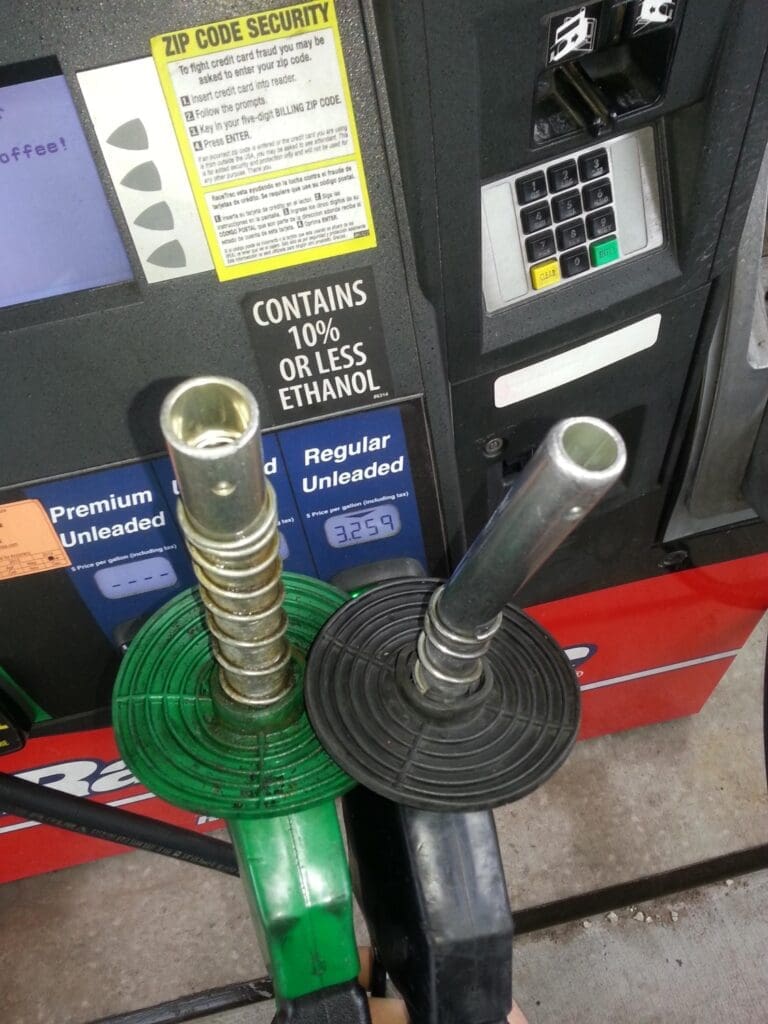
Vehicle manufactures, along with the fuel companies determined the root cause to be the diesel-powered car filler neck design. To solve this problem, they instituted a Poke-Yoke, or mistake proofing of the fill-up process. They designed out the human error element. They coordinated the nozzle of the fuel pump, and the filler neck of the vehicle to only be compatible when using the correct fuel. This simple change made it almost impossible to fill the tank with the wrong type of fuel. This is what we would call a preventative Poke-Yoke.
Other Poke-Yokes can be detection, or after the fact. Perhaps a gauge used to verify that a parts measurement is in tolerance before shipping to the customer. In the case of the wrong fuel getting put in the vehicle, detection would be after the fuel was put in the tank, and still a major headache for the vehicle owner.
We should always strive for preventing the mistake when designing the process for any task. Let’s make sure we are always thinking about ways to make the process as error proof as possible. When we truly respect a person’s desire to do the right thing we need to give them the tools and processes to do so. If we focus on the process and not blame the person, we can travel far down the road of real continuous improvement.