How do we best facilitate change within our organizations? Better yet, how do we initiate the right kind of change today? The answer is simple: Kaizen.
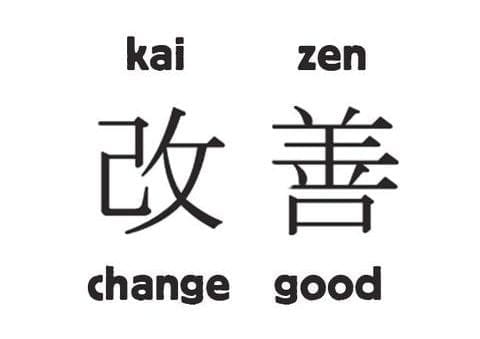
Kaizen is a Japanese word made up of two distinct characters: One character means ‘change’ while the other means ‘good’ or ‘better.’ Together, they mean ‘change for the better,’ or in other words, continuous improvement.
Kaizen was first practiced in Japanese businesses after World War II, influenced in part by American business and quality-management teachers, and most notably as part of The Toyota Way.
Why is Kaizen Important?
According to Masaaki Imai, a Japanese organizational theorist and management consultant, every company should embrace Kaizen. When implemented correctly, kaizen can:
- Boost productivity
- Increase efficiency
- Improve quality of products/services
- Minimize waste
- Save management time
- Reduce costs
- Improve safety
- Increase profitability
- Increase customer satisfaction
Daily Kaizen vs. Kaizen Events
Daily kaizen is the practice of every person in your organization seeking opportunities for improvement every day. Daily Kaizen helps establish a total organizational mindset driving processes to me more efficient, faster, higher quality and better for the customer. Paul Akers gives us a great example of this in his book, “2 Second Lean.” In the book, Paul challenges the readers to “fix what bugs you.” He also writes about how he taught his employees to make a 2-second improvement every day.
A Kaizen Event is a focused team activity with a specific, aggressive breakthrough objective aimed toward solving a well-defined problem. Basically, we are taking the improvements that would have been implemented over a 3-6 month period (using ‘daily kaizen’ philosophy) and completing them in a focused 3-5 day event. As a team member on a kaizen event team, you can expect to accomplish huge results in a very short time frame.
Kaizen events should never be a stand-alone activity for promoting a lean culture. Rather, they should be combined with daily kaizen activities and driven by an engaged and supportive leadership team.
How to Facilitate a Kaizen Event
Here’s a list of the different steps that should be taken during the Kaizen Event itself.
- Train participants on lean and six sigma principles and tools that will be used
- Present input from customers, which should provide a clear picture of where the process is succeeding and failing
- Present data on the current operation
- Map out of the current operation using a flow chart, process map, or value stream map
- Analyze the current process to find steps that don’t add value (waste)
- Brainstorm ideas to improve these areas
- Establish a process to implement changes
- Define ways to measure the success or failure of the changes
- Present a report on the findings to leadership
Here are 5 important facilitation techniques to keep in mind…
- The entire week is one big Plan, Do, Check, Act.
- Most of the planning is done up front with the pre-work.
- The week focuses heavily on doing as much work on the gemba as possible.
- We invite the executive and any project champions to come back at the end of each day for a summary
- We also have the executives and champions attend the kick-off and final report at the end of the week.