The Single-Minute Exchange of Die (SMED) methodology, initially developed by Toyota for minimizing setup times in manufacturing, has become a valuable tool across various industries. SMED focuses on reducing downtime, increasing efficiency, and enhancing overall productivity. While it originated in manufacturing, its principles can be applied to non-manufacturing settings to achieve impressive results.
Toyota’s SMED activities have transcended manufacturing, finding applications in sectors as diverse as healthcare, services, and information technology.
Understanding SMED
Before delving into its applications outside manufacturing, let’s briefly understand the core principles of SMED:
Step 1: Study the Process.
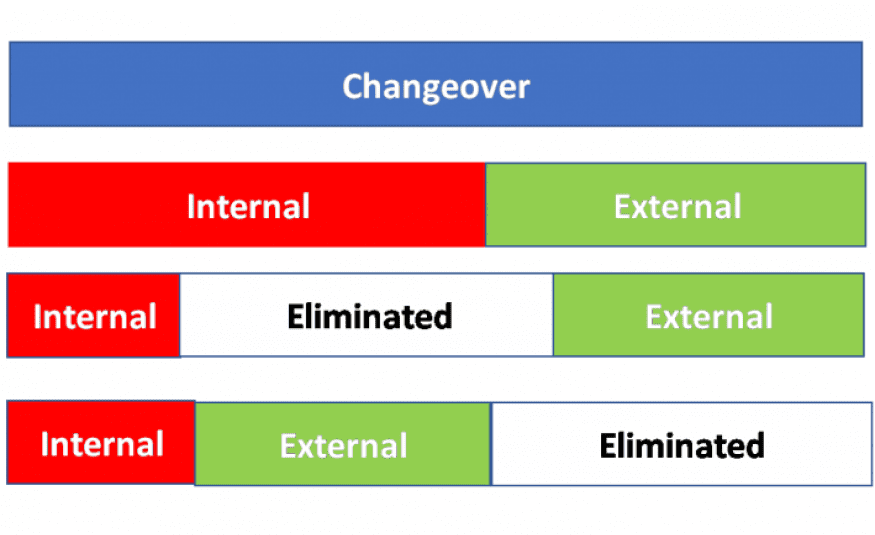
Step 2: Separate internal and external work.
Note: Internal work is what you can perform only when the machine is stopped. For example, removing the tool from the machine. External work is what you can do while the machine is running. For example, grabbing the tools you need to perform the setup.
Step 3: Convert internal work to external work. The primary objective is to reduce internal setup activities and convert them into external setup tasks, which can be performed concurrently with the production process.
Step 4: Reduce time associated with internal work.
Step 5: Reduce time associated with external work.
Note: At this point, another strategy is to look for tasks that can be done in parallel.
Step 6: Standardize and maintain the new procedure over time. Establishing standardized procedures, tools, and checklists for setup processes is essential to reduce variability and improve efficiency.
Step 7: Pursue Perfection! Regularly evaluating and refining setup processes is crucial to minimize setup times over time.
Click Here for Patrick’s Latest SMED Activity
SMED in Non-Manufacturing Environments
- Healthcare Sector
In healthcare, SMED has shown its potential to enhance patient care by minimizing administrative tasks, reducing wait times, and improving resource allocation. For example, a hospital’s emergency department can apply SMED principles to streamline the admission and discharge processes. By standardizing paperwork, utilizing digital systems, and optimizing staff allocation, hospitals can improve patient throughput, reduce bottlenecks, and enhance overall patient satisfaction.
- Service Industries
The service sector is another arena where SMED can shine. Restaurants, for instance, can use SMED to optimize their table turnover rates. Streamlining tasks such as menu preparation, table setting, and bill processing can significantly reduce the time patrons spend waiting, leading to improved customer satisfaction and increased revenue.
In the financial industry, banks can apply SMED to expedite account opening processes, reducing customer wait times and improving the overall banking experience. Standardized documentation and digital solutions can help in making this transition possible.
- Information Technology
IT departments can benefit from SMED by improving system maintenance and software updates. By simplifying the deployment process, reducing downtime during updates, and establishing clear procedures, organizations can ensure that technology is always available, minimizing disruptions and increasing operational efficiency.
- Education
Educational institutions can employ SMED principles to streamline administrative tasks such as class scheduling, student registration, and exam preparation. Reducing the time spent on these activities can improve resource allocation, reduce waiting times, and ultimately lead to a better learning experience for students.
Challenges and Benefits
While SMED has the potential to deliver substantial benefits in non-manufacturing environments, it’s important to recognize that applying these principles can present unique challenges. Resistance to change, varying processes, and the need for stakeholder buy-in are some of the hurdles to overcome. However, the benefits, such as improved efficiency, cost reduction, and enhanced customer or patient satisfaction, often outweigh these challenges.
Conclusion
Toyota’s SMED methodology, which originated in manufacturing, has proven to be a versatile tool that can be applied to various non-manufacturing sectors. By optimizing processes, reducing downtime, and enhancing productivity, SMED can lead to a more efficient and customer-oriented environment in fields as diverse as healthcare, services, information technology, and education. The key to successful implementation lies in understanding the specific needs of the industry, standardizing processes, and fostering a culture of continuous improvement. As industries continue to evolve and place greater emphasis on efficiency and customer satisfaction, the adoption of SMED activities outside manufacturing will likely become more widespread and beneficial.