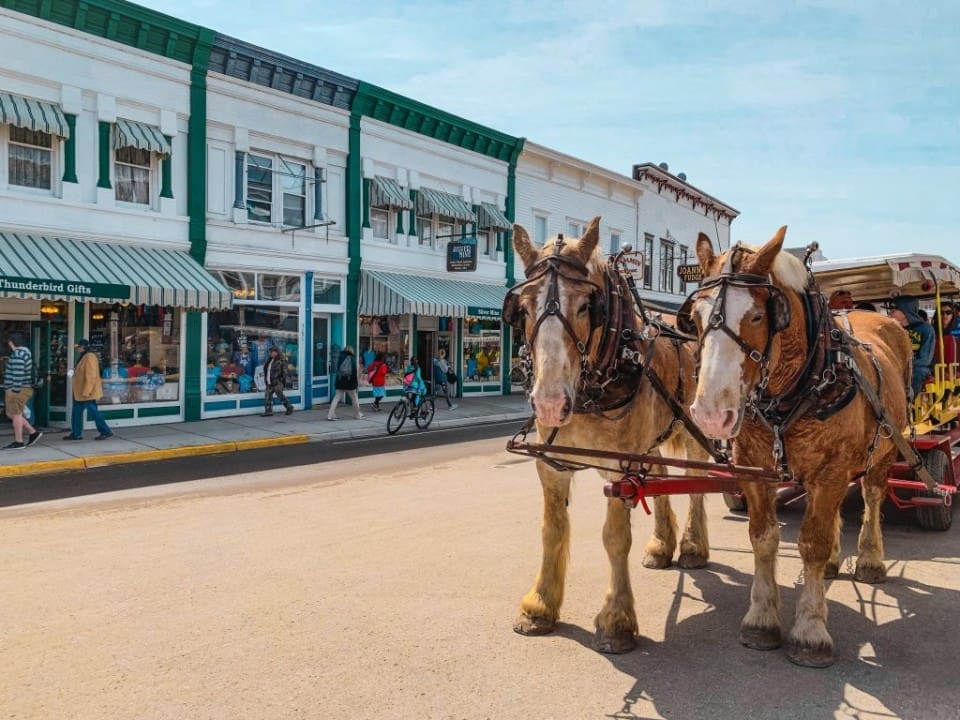
I recently spent some time in the Upper Peninsula of Michigan. While there I took one of my days and visited Mackinaw Island. It was just a short ferry ride to be transported to another world. Mackinaw Island truly felt worlds away when you experience the lack of vehicle traffic. You see, there are no vehicles allowed on the Island. Everything is moved by horsepower. The four-legged kind. Horses hooked to wagons, carriages, and flatbeds, are what makes the island run. People, packages, food, waste, and other necessities, are all moved by horse. At first glance this might not seem like such a big deal, but the more I looked around I noticed just how much product was getting moved and could see how everything happening on the island was a process.
Lets take my lunch for example: I started by choosing a restaurant. Then, I added my name to the waiting list. Next, we were sat at our table. We ordered our food. Our food was made and delivered to us. We ate our food. And finally, we paid for our lunch.
This one process took place among hundreds of other processes all happening at the same time on the island. And, every process has a start, and end, and a goal.
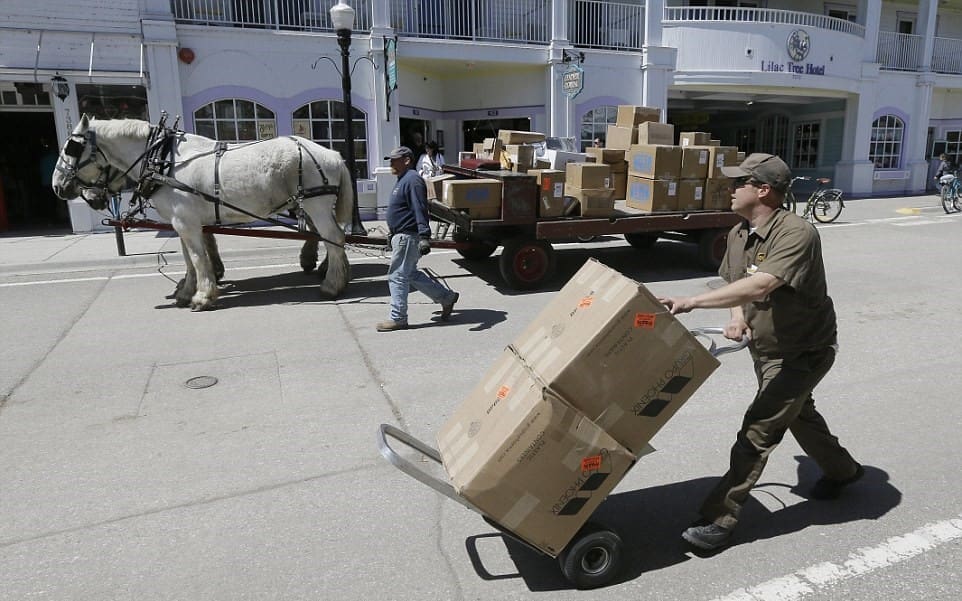
Restaurants, hotels, and endless rows of shops all had people and product coming and going all day long. I couldn’t help but wonder what the horses must be thinking. I took the time to get up close and personal to a couple of the four-legged workers. I noticed right away they all had blinders on. If you have visited the Island you know just how busy it can be, especially in the middle of the summer at peak tourist season. It makes sense that the horses delivering the food to the restaurant I was dinning at wore the blinders. I noticed the horses the UPS delivery driver was using, as well as the carriages transporting visitors also wore blinders. The horses did not need to see the big picture. As a matter of fact, the big picture would probably be a dangerous distraction for them. As long as they had food, water, rest, and shelter, their needs were met.
What about your companies’ requirements? Are we ensuring all parts of our organization are getting their needs met? The UPS delivery person on the island had a wagon driver controlling the horses. The driver would advance the wagon and hold up to allow the delivery of packages with the minimal number of footsteps needed to complete the task. The waste and recycling wagon had a dedicated driver that kept control, as others filled the wagon with waste and recyclables. There was constant collaborative effort everywhere I looked. The workers on the Island had to work together to make life easier on each other, and the guests.
What about your organization? Remove any blinders you might have and look around you. Can you see all the processes around you? See if you can break them down into steps. We can state a process is made out of steps, whereby each step can be identified as a process. Next, we can describe a process as having a start, an end, and a specific outcome (goal).
Describing a process helps you to purposefully change the process towards a different (better) outcome. Here are three areas to consider:
- Understand the goal and requirements of every process. Ensure you understand how your work is effecting others.
- Ask yourself if there are ways to eliminate steps in the process? Or…do you need to add steps?
- Once processes are looked at in steps, seek out ways to optimize steps (Delegate, Automate, Change).
Are we working together everyday to make sure we are aware of our processes and we understand the process steps? Do you know how they affect the people around us; both upstream and downstream? Take a moment and think about how your actions impact others. Let’s make sure we are not wearing blinders!