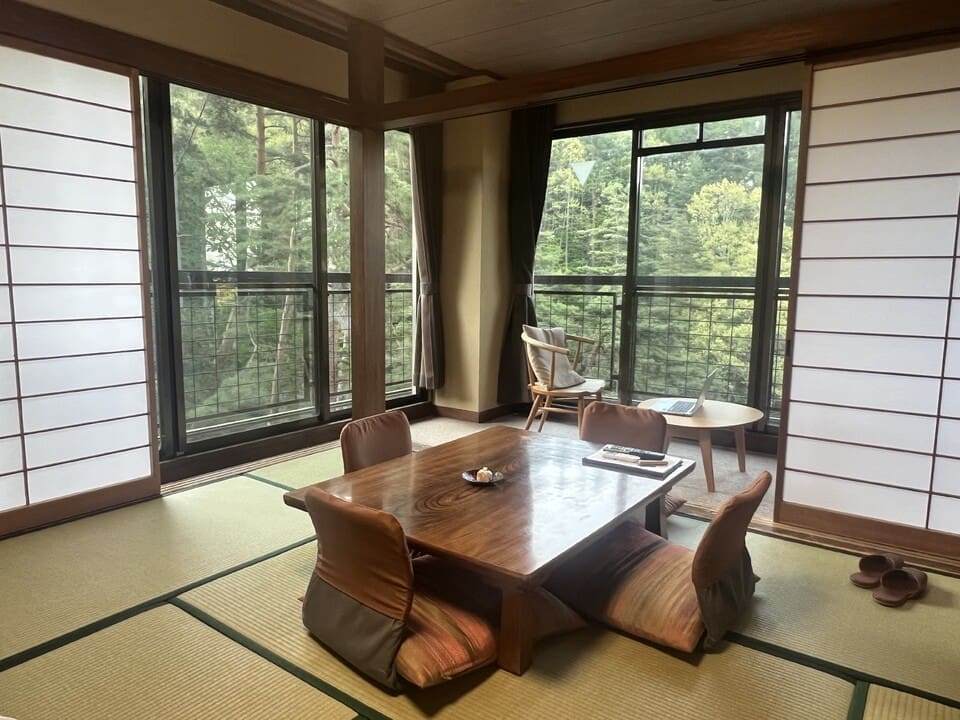
As I write to you this morning, I am enjoying my view of the Central Alps from the balcony in this traditional Japanese Ryokan. Our stay here has been very special and relaxing. The Ryokan has an Onsen, or hot spring, for its guest to enjoy as well. We travelled here through the mountains from Nagoya. Before we left Nagoya, however, we had some other pretty amazing experiences.
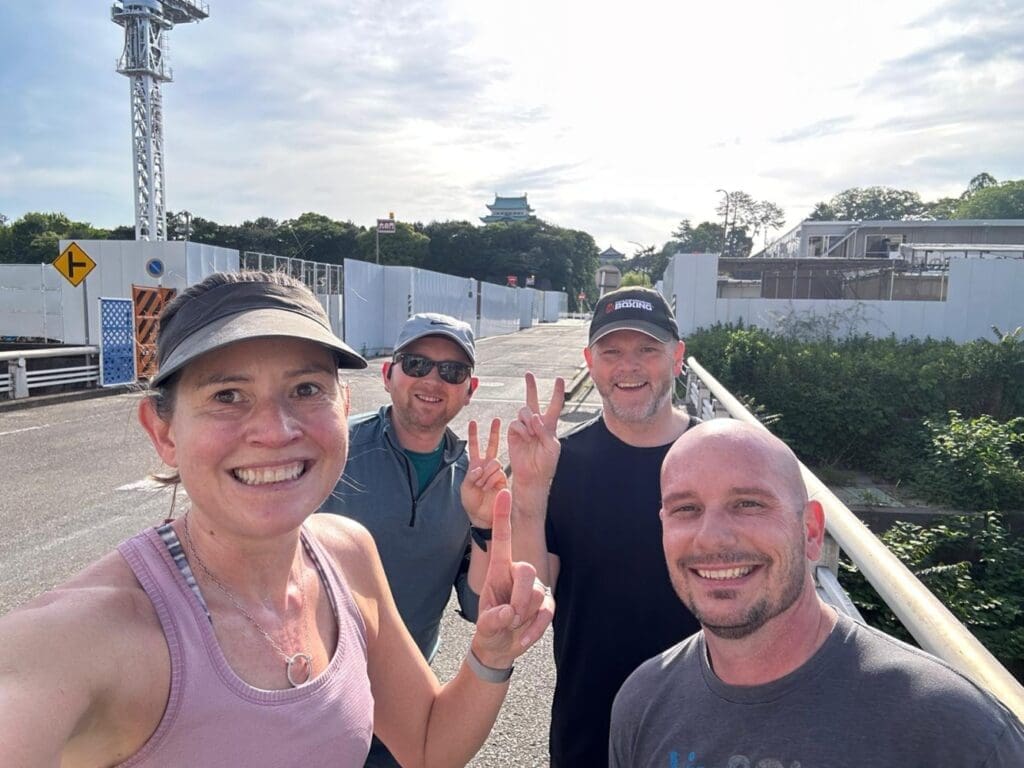
A group of us ventured out on a morning run to explore Nagoya; we planned to run to the Nagoya Castle and back which ended up being about 4 miles. It was a beautiful morning and our discussions were so valuable as we reflected on the first few days learnings. While running, we came across a group of young children walking in formation, two columns, one directly in line behind the other. They were being led by another child, slightly older than the others. They left their street unaccompanied by their parents heading into the heart of the city. My understanding is that children are expected to take on challenges and difficulties from an early stage in life, and alludes to the fact that Japanese children are typically socialized into becoming independent and taking care of themselves at a younger age than are many children in Western countries. But my real interest was on the ‘slightly older’ child leading the group. Parents had placed a lot of trust in him and he was given a high level of responsibility. What a great growth opportunity for these children! Little did I know, there was more to come today when it came to youth development in Japan and its significance to the success of the Toyota Production System.
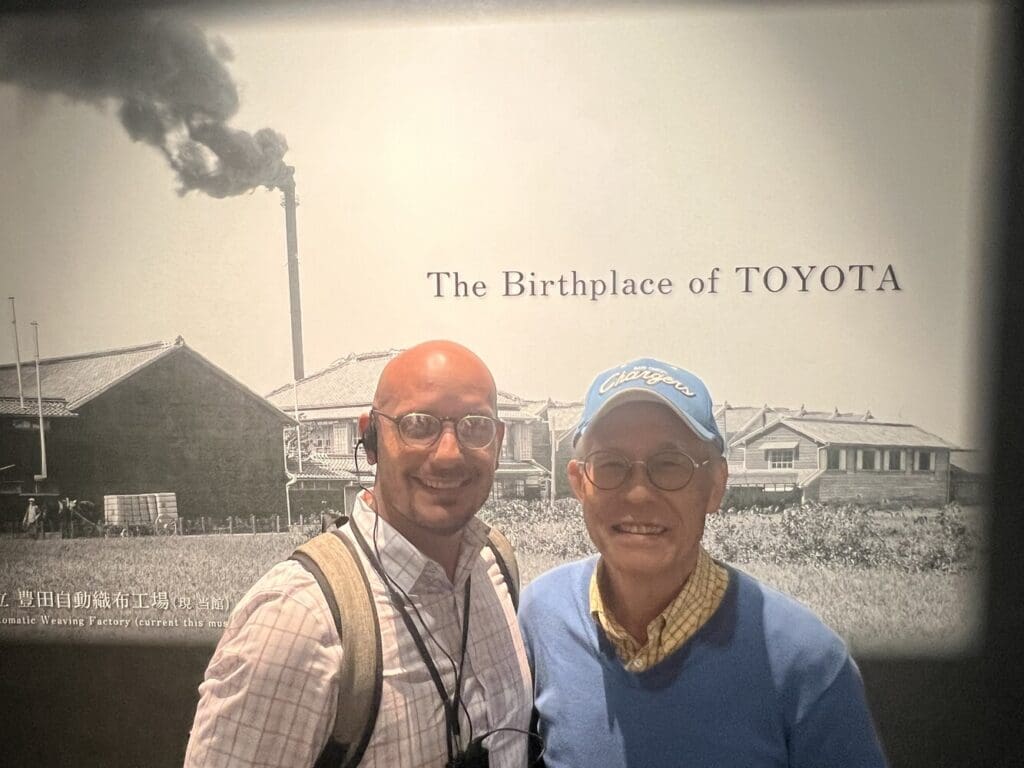
Before lunch, we travelled to the Toyota Commemorative Museum located inside a pilot factory built in 1911 by Sakichi Toyoda to research and develop automatic looms. I was blown away by the evolution of Toyota’s innovation from the original looms to the highly automated weaving all the way to the history of the automobile. And to think all of this started because one young man (Sakichi) thought that if he could find a way to improve the efficiency of the hand loom, it would benefit many people, including his own mother. He saw a problem, and he decided to find a solution. I was especially impressed to see the ‘built-in-quality’ examples in the early looms.
After leaving the museum, we stopped for lunch at Kura Sushi; a sushi chain restaurant operating on the principles of offering low prices and high quality. They established a new model of food service based on a conveyor belt go-round and customer direct order. Check out my post here with a short video:
After lunch we stopped at Tsuda Elementary School. This might have been my favorite stop all week! The principle greeted with a big smile and directed us to a classroom. He explained some of the curriculum taught in all schools; one of the interesting classes is one on morals. Students are taught: “I will do my best.” “I will keep my promise.” Children are evaluated on daily life, not just grades. “Greet others with energy.” “Listen carefully.” He said the most important concept taught in Japanese schools is that of waste reduction; only take what you will eat, never use more than you need, etc. Waste reduction? Where have we heard that before?
The children had just started eating lunch at their desks. I learned that Japanese school lunches are carefully planned and do not include any of the “fast food” options. In fact, the students complete a survey each day where they rate the food. The survey results are reviewed regularly and improvements are made. School lunch is served by the students…even in 1st grade! The students rotate in groups being in charge of collecting the meal, serving it, and then taking the dirty dishes back. The students were not only responsible for serving the other students, but they also served their teachers; and the teachers eat the same food as the students and eat with the students.
After watching the students eat lunch, the chime rang and it was time for clean-up; but this wasn’t any normal clean-up…the students went to their assigned areas and began cleaning the entire building. For 15 minutes, the students swept, mopped, dusted, and even cleaned the toilets! Elementary schools in Japan do not have janitors; rather, they rely on the students to clean. Think about that for a minute; if the students have to clean the toilets themselves, do you think they make a mess when using them? Children are taught from an early age to be responsible for their own areas. And once again, the teachers are not instructing the new or younger students how to clean; rather, its the slightly older students who are teaching and coaching.
I noticed a certificate on a table showing the school had received formal “kaizen” training. When asked about kaizen, the principal told us that all students are taught to become better everyday, even just a little bit matters. He said, its not always about the results, it about the learning journey.
Our last stop was Isuzu Steel, a tier 1 supplier to Toyota. The plant manager met us at the door and conducted the tour. He told us that 100% of the people participate in kaizen. Each morning they start their day with stretches (by the way, the same stretches are done in every company in Japan), then a 5 minute stand-up meeting followed by 5 minutes of cleaning. The plant did not employ a janitor, it was the responsibility of the workers (starting to see a theme here?). During the tour, the plant manager showed us an example of a “world class” SMED activity. Prior to the improvements, two technicians would change the die’s by hand. This took a very long time and was very difficult. While standing in front of the machine, we witnessed an amazing example of the improvements that had been made to the changeover. The machine die’s were changed over in just a few minutes with the use of engineered solutions; by the way, both Avex and Isuzu told us they engineer all solutions in house using their own people.
Days 4 Reflections:
- Companies in Japan do not employ janitors because their people take care of the cleaning; they are raised from an early age to be responsible and take care of things themselves. In fact, they also do not employ maintenance personnel, they take great ownership in the equipment and in their space to ensure proper upkeep themselves.
- The auto industry is changing drastically; many of these companies are innovating and diversifying their products to ensure long-term success of the company.
- Kaizen is embraced everywhere and taught at a very early age.
- Its not about the results, its about the journey and the experience.
- I absolutely loved the feedback form at the school for lunches; they are creating an atmosphere where feedback is good. Honesty is accepted and encouraged. ‘Continuous improvement’ is the way they live.
- The Toyota Production System was so very successful because it was build on principles that are already being taught, encouraged, and reinforced at a very young age here in Japan. The Japanese culture reinforces and feeds into the success of the TPS.
Today is Day 6, so I am a little behind on my updates. More to come!