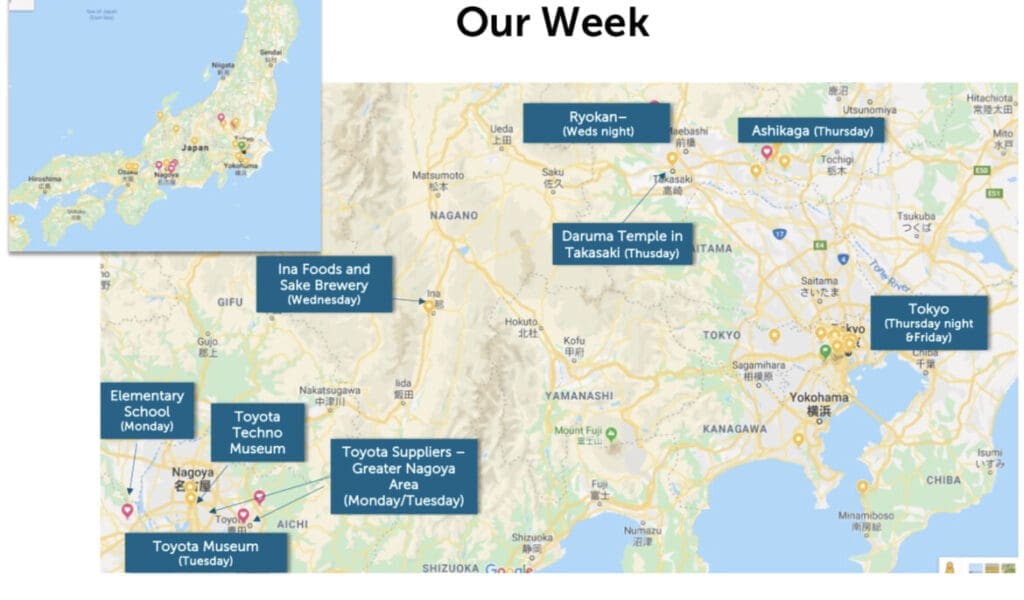
In 2019, I began conversations with Katie Anderson about her Japan Study Trip 2020. I was locked in for the trip and excited for the experience. Little did we know, Covid had other plans. The trip in 2020 was cancelled as was the trips for the next few years. However, this last fall, I received the message from Katie that Japan was opening up and she was planning a spring trip. I was ecstatic and told her to lock me in!
Finally, I was heading to the “gemba.”
Genba or Gemba is a Japanese word that means the real place, the place where the actual work is done; or the ‘site’ or ‘scene’ where the action is happening. In my work as a lean coach, I always recommend individuals spend time at the gemba. When trying to solve a problem, this is the place they will find their answers. As a lean leader, this is where you lead with participation and not proclamation. For me, I saw Japan as my ‘gemba.’ The ‘site’, ‘scene’, and origin of the Toyota Production System. This is the ‘real place.’
I have been practicing lean thinking myself for many years. I have been trained and coached by many great lean experts. I am a practitioner, coach, trainer, and consultant. I have led and been a part of many great lean journey’s, turn-arounds, successes, and have personally experienced the amazing results of a true culture of continuous improvement. However, I have never been to the ‘gemba.’
As a a life-long learner, it’s finally time for me to spend time at my ‘gemba.’
I am so thankful to Katie Anderson for her leadership this week as she leads our learning in regards to the Japanese culture, Lean Thinking, and the Toyota Production System. Her challenge: “Come to this experience with an open mind of what you will see, hear, and experience. Be fully present. Actively reflect (practice hansei).” Her goal: “For you to more deeply understand the leadership mindset and behaviors that underlie successful people-centered learning cultures like Toyota and many others you’ll experience this week. Your experiences this week will enrich your understanding of leadership, continuous improvement, and customer service.”
Day 1:
After 15+ hours in the air, I arrived in Nagoya, Japan. It was Saturday night and I was tired. I boarded the train from the airport bound for Nagoya Station (about 40 minutes). As I looked around, I noticed everyone was very quiet, and no one was talking on their phone; it was as if they were intentionally mindful of those around them. This was much different from other public transportation I had experienced in the past. I have to admit, I was a little confused. I knew I needed to get off at Nagoya Station, but I wasn’t sure exactly which stop that was. I asked a young Japanese couple sitting next to me on the train and luckily one of them spoke a little English. She told me they were also getting off at Nagoya Station and to simply follow them. Simple enough! When our stop came, they stood up and motioned for me to follow. I made it! But now what? I was searching through my phone looking for the directions Katie had sent when I felt a tap on the shoulder. It was the young couple, they asked if I needed directions. Once I told them where I was going, they literally walked me through the subway maze to my hotel and ensured I made it safely to the front door. They bowed and waved enthusiastically as we departed.
This was my first experience in Japanese culture. This wonderful couple was so kind to me. It was late and I’m sure they had places to be, but instead, they took time to help a stranger. The Japanese are taught to be thoughtful and respectful from a very young age (I will talk more about this after our trip to the elementary school). I would learn later the Japanese word, “Giri and Ninjo, ” which refers to sympathy and compassion to others. It is widely considered as one of the most valued concepts which is essential for better human relationships.
Day 2:
I intentionally arrived a few days prior to the start of Katie’s program to allow my body to adjust to the time change. I took this day to visit a few amazing places around Nagoya and ended up meeting a few study trip colleagues later in the day.
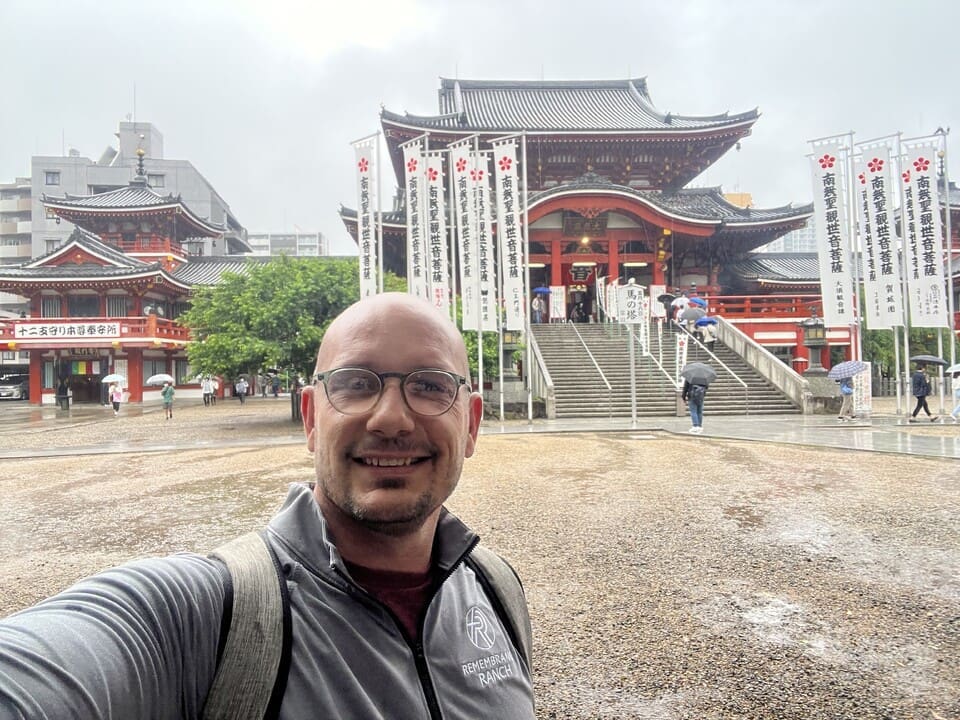
After some reading over breakfast (Tree-Ring Management by Hiroshi Tsukakoshi, whom I will meet Wednesday this week when we tour Ina Food Industry), I ventured out to the Ōsu Kannon Temple and nearby Osu Shopping District. The 大須観音, Ōsu Kannon is a Buddhist temple and houses the Shinpukuji Library underneath which contains over 15,000 classic Japanese and Chinese texts.
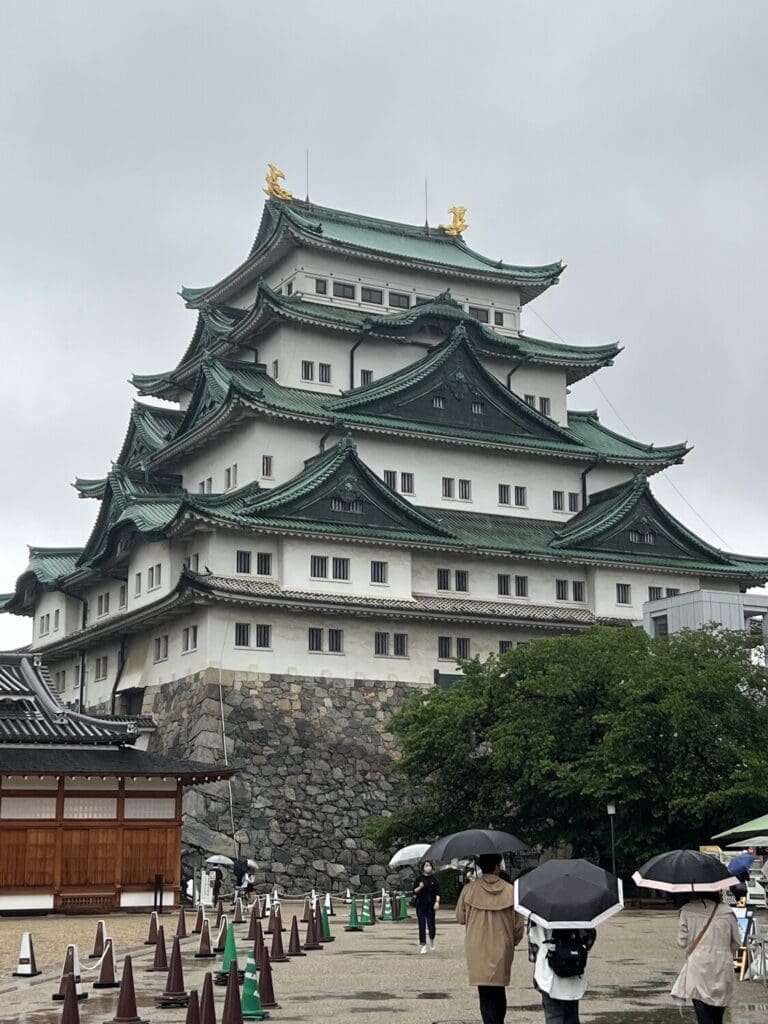
After a short walk around the temple and neighboring shopping area, I jumped on the subway train to Nagoya Castle. It was here I met up with Isaac B. Mitchell, FACHE, Glenn Wilson, CISSP, and Julie Savage-Fournier, P. Eng.. While touring the castle’s palace (Honmaru Goten), we learned about the history of the shogun and the the first feudal lord of Owari.
Day 3:
We kicked off the first day of the hashtag#japanstudytrip program in a beautiful conference room overlooking the city of Nagoya. Mr. Isao Yoshino (a 40+ year Toyota Leader and former NUMMI training manager) spent time with us discussing the key roles of managers at Toyota and a leaders purpose in any organization. Here were some take-away’s:
- A leaders purpose is to set direction, provide support, and develop yourself.
- Leaders create the environment to help people follow the company strategy (hoshin kanri). Create a culture of openness; genuine empathy and care.
- Leaders help people grow constantly. The number one priority of any leader should be people development. Listen to the people working for you. Notice when they need help and provide the support they need.
- Toyota was so successful with Hoshin Kanri because they are “so serious” about it. Success came from employee involvement at all levels, focus on biggest issues, and setting clear targets.
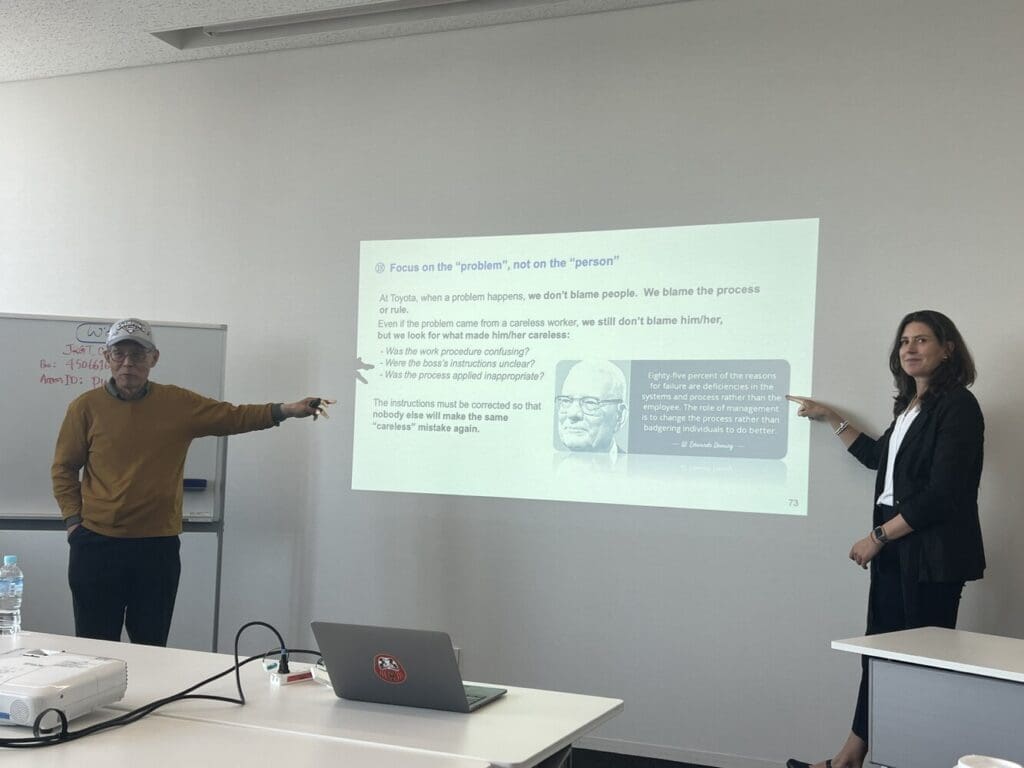
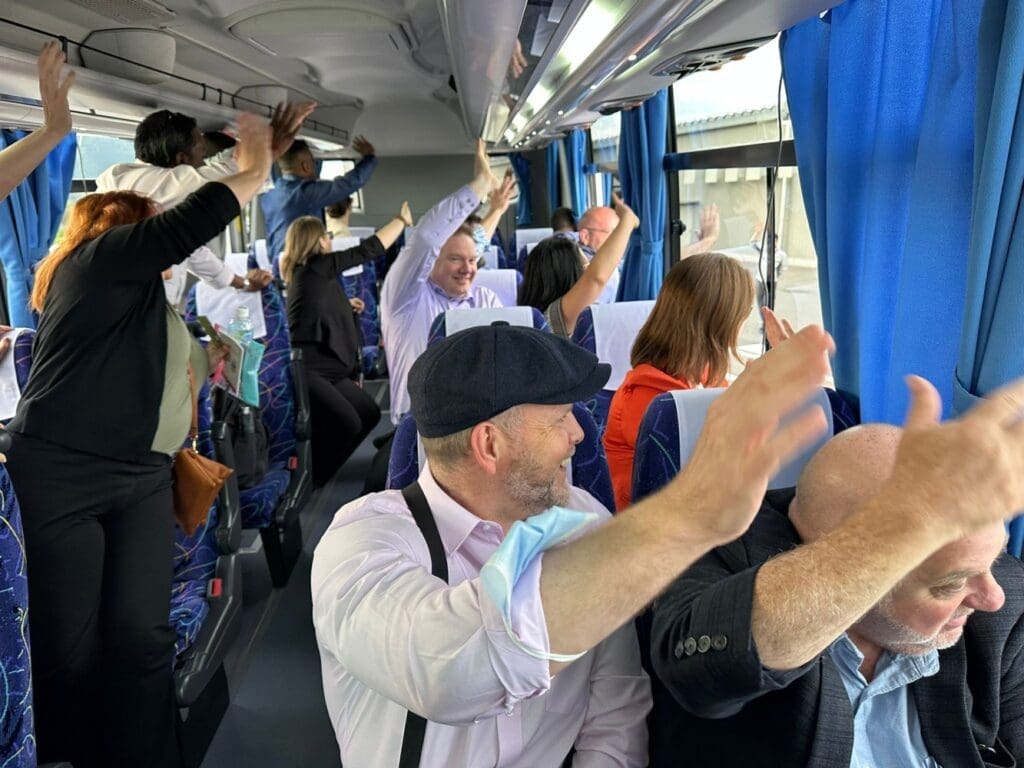
After lunch, we jumped on a bus and headed for Avex Manufacturing (Toyota tier 2 supplier). We had some amazing discussions with Mr. Yoshino about the culture of Japan and expanded on some of the points he talked about in the morning. The tour of Avex was extraordinary. The president of the company shared a presentation and answered many questions. He was not wearing a suit and did not come from the corner office. He was wearing the same uniform as his people and spoke with great humility. He was a perfect example of leading with participation, not proclamation. His protection and commitment to his people stood out most to me. He said, ” we have gone through many crisis’ in the past few years, but we have never laid off anyone.” he spoke of the people of Avex as his ‘family.’ He went on, “During the down-turns, we pursue kaizen and develop our people. I ask them, let’s think together how we can survive. And we figure it out together.”
As we left, the president stood outside and waved as we left. It is the Japanese custom for the host to wave good-bye enthusiastically until you cannot see each other anymore.
Days 1-3 Reflections:
- Its not so much about the goal itself, its about the journey to get there.
- Protect your people, when in crisis, give them a chance to help figure things out.
- Leaders need to be serious; not just proclaim, but participate.
- Number one priority is developing people.
- People are family; should be treated as such.
- Kaizen is not an event, it is our work.
- Avex did not have a maintenance department; the president said, “the machines are the technicians ‘babies,’ they take care of them.” More about this in my next article!
- Making the same mistake twice is cancer.
- Management responsibilities; 50% at the gemba, 30% kaizen, 20% growing the team.
- As our people grow, so does our company.
- Connection to serving their community.
Next on my journey through Japan…