Recently, I joined a group of friends for a snowmobile trip through Michigan’s Upper Peninsula, an area known for its breathtaking landscapes and winding trails. The scenery was stunning—pristine snow, crisp air, and miles of trails winding through the wilderness. It was everything you could ask for on a snowmobile adventure, except for one unexpected twist that turned into a profound lesson in leadership.
Here’s what happened:
On the first day, we were worried there might not be enough snow to ride. The trails looked questionable, and we started to wonder if our plans might be cut short. But as the day went on, the snow held up, and the trails turned out to be fantastic! Spirits were high as we navigated the beautiful terrain. On the second day, we trailered to Paradise, Michigan, and began our ride to Whitefish Point. It was an unforgettable journey through deep snow, along Lake Superior’s rugged coastline, and into the heart of Michigan’s winter wilderness.
The trip was a mixture of triumphs and challenges, with lessons that resonated deeply with my experiences in leadership. Here’s how those moments on the trails translated into actionable leadership insights.
1. Leadership is Stronger with Collaborative Navigation
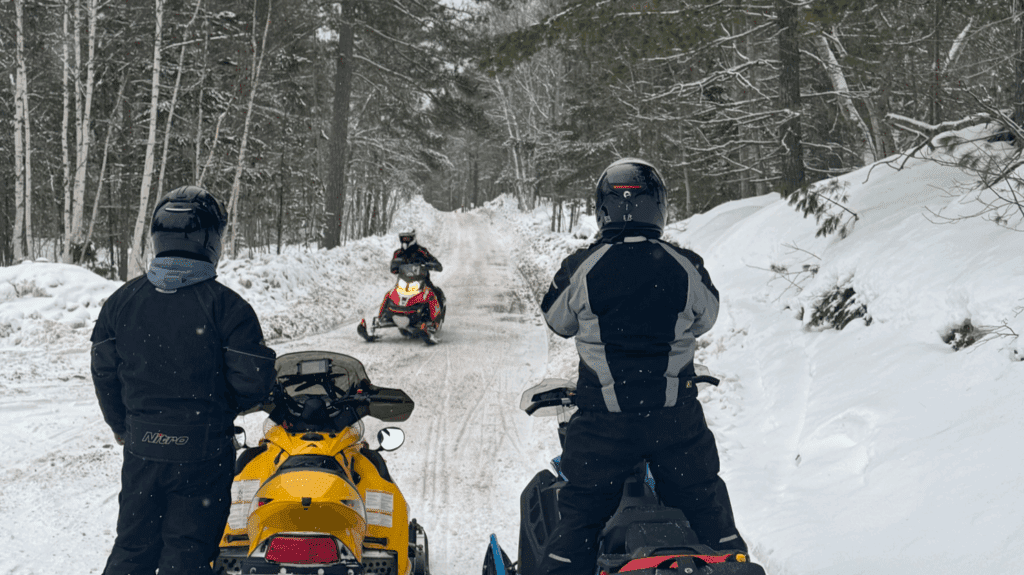
On the ride to Whitefish Point, our trail boss led the group with determination, but the unfamiliar trails and varying conditions required multiple stops to consult the map and reassess our route. While he carried the responsibility of leading, our group collaborated to support him. Some of us checked trail signs, others confirmed map directions, and we worked together to find the best way forward. It was a team effort to navigate the challenges and keep us on track.
Leadership Takeaway: Leadership isn’t a solo endeavor—it thrives on collaboration. Just as our group worked together to support the trail boss, teams in the workplace can strengthen leadership by contributing their skills and perspectives. Whether it’s offering insights during strategic planning or double-checking critical details on a project, collective effort ensures the team stays aligned and achieves its goals. Leaders don’t have to do it alone—effective teams succeed when everyone contributes to the journey.
2. Good Communication Creates Safety and Efficiency
Throughout the ride to Whitefish Point, our group excelled in communication, which kept us safe and aligned. At every intersection or turn, each rider stopped to wait for the next person, ensuring no one got lost. We also stopped frequently as a group to discuss the route and confirm our next steps. Additionally, when encountering snowmobilers heading in the opposite direction, we signaled the number of riders behind us, helping everyone stay aware and safe on the trails.
Leadership Takeaway: Effective communication is not just about relaying information—it’s about ensuring clarity, alignment, and safety for the entire team. In the workplace, this can look like regular check-ins during a project, ensuring team members are aligned on responsibilities and next steps, or taking proactive measures to keep everyone informed. Great communication fosters a sense of collaboration and trust, enabling the team to move forward efficiently and safely, even in complex situations.
3. Trust, Respect, and Input Strengthen Leadership
Our group was composed of experienced snowmobilers, and while we trusted the trail boss to lead the way, there was a strong sense of mutual respect that enhanced our teamwork. The trail boss frequently paused to ask for our input, relying on our observations of trail signs, snow conditions, and landmarks. In turn, we respected his role and supported his decisions, knowing that leadership thrives when it’s a two-way street. This collaborative and respectful dynamic helped us navigate challenges effectively and stay aligned as a team.
Leadership Takeaway: Trust and respect are the cornerstones of effective leadership. While leaders may carry the responsibility of decision-making, seeking input from the team shows respect for their expertise and builds stronger cohesion. In the workplace, this could mean fostering an open dialogue where team members feel valued and heard. Leaders who cultivate trust and mutual respect create an environment where collaboration thrives, enabling the team to tackle challenges with confidence and unity.
4. Embrace the Grey Zone with a Problem-Solving Mindset
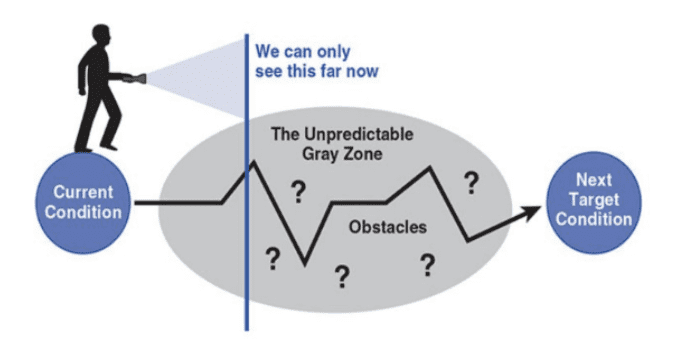
Our planned route to Whitefish Point included a section of trail that was unknown to us. We didn’t have a clear understanding of this portion, which added an element of unpredictability to the journey. When we reached this “grey zone,” we had to adapt by assessing the trail as we went, using our collective experience to make decisions in real time. It wasn’t about knowing the exact path—it was about navigating uncertainty together.
This experience reminded me of Toyota Kata, a structured approach to continuous improvement and problem-solving. Kata emphasizes working toward a goal step by step, experimenting, and learning as you go. It acknowledges that the path to success often includes unknowns and unpredictable challenges, requiring a mindset of curiosity, adaptability, and collaboration.
Leadership Takeaway: Leaders and teams frequently encounter grey zones—situations where the path forward isn’t clear. Embracing these moments with a Kata mindset can help teams navigate uncertainty effectively. Start by defining your target condition, taking small steps, and learning from each outcome. By focusing on incremental progress and fostering a culture of adaptability, leaders can guide their teams through ambiguity and uncover the best path forward. Just as we adapted to the unknown trail, leaders can empower their teams to thrive in the face of unpredictability.
5. Celebrate Milestones, Not Just the Destination
When we finally reached Whitefish Point, the view was breathtaking—Lake Superior’s frozen expanse stretched as far as the eye could see. After the effort it took to navigate unknown trails, pause to confirm directions, and overcome the uncertainties of the day, standing together at our destination felt incredibly rewarding. Despite the challenges, we took time to savor the moment, capturing photos, sharing laughs, and reflecting on the journey that brought us there.
But the celebration didn’t start and end at Whitefish Point. Along the way, we acknowledged smaller milestones—reaching key trail intersections, successfully navigating unknown sections, and even the camaraderie of riding safely through tricky terrain. Each of these moments reminded us that the journey is just as important as the destination.
Leadership Takeaway: Celebrating milestones, no matter how small, is a critical component of effective leadership. It reinforces a sense of accomplishment, boosts morale, and keeps the team motivated for the road ahead. In the workplace, this could mean recognizing incremental progress during a long-term project, celebrating team wins after overcoming a challenge, or simply appreciating the effort and dedication that team members bring to their roles.
As leaders, it’s easy to focus on end goals, but acknowledging and celebrating progress along the way fosters a positive team culture. This practice not only strengthens the team’s resilience but also ensures that success is felt throughout the journey—not just at the finish line. Just like our adventure to Whitefish Point, the joy isn’t only in the destination—it’s in the collective effort to get there.
Bringing It All Together
This snowmobile trip was a powerful reminder that leadership is about more than just reaching the destination—it’s about how you navigate the journey, especially through the grey zones of uncertainty. The lessons from our ride to Whitefish Point—collaborating to support leadership, fostering open communication, building trust and respect, and embracing the unknown with a problem-solving mindset—are directly applicable to any team or organization.
As leaders, we must recognize that not every path will be clear. By focusing on collaboration, clear communication, mutual respect, and continuous improvement, we can guide our teams through challenges and uncover new opportunities along the way. Just as our group worked together to tackle unpredictable trails, leaders can empower their teams to navigate ambiguity and achieve their goals one step at a time.
After the ride, our group capped off the day by unwinding together—having some extra fun with the golf simulator and a few beers. It was a chance to reflect, share stories, and enjoy each other’s company, reminding me that part of strong leadership is building camaraderie and creating moments for the team to relax and connect.

As I reflect on this experience, I challenge other leaders to think about how these principles apply to their own teams:
- Are your team’s roles and responsibilities clearly defined?
- Do you have processes in place for open and consistent communication?
- Have you created an environment where every team member feels empowered to speak up?
- How adaptable is your team when faced with unexpected challenges?
- Do you celebrate the journey as much as the destination?
What about you? How do you approach the grey zones in your leadership journey? And how do you take time to enjoy the ride with your team? I’d love to hear your thoughts and experiences—let’s keep learning from each other!