While Lean thinking was popularized in manufacturing, particularly by Toyota, its principles have demonstrated broad applicability across various industries, including healthcare, education, government, and construction.
Lean Principles Overview
Lean thinking is centered around five core principles:
- Value Definition: Identifying what is valuable from the customer’s perspective.
- Value Stream Mapping: Analyzing the flow of materials and information currently required to bring a product or service to the customer.
- Flow Creation: Ensuring that the value-creating steps flow smoothly without interruptions.
- Establishing Pull: Producing only what is needed by the customer, thus reducing excess inventory and work-in-progress.
- Pursuing Perfection: Continuously improving processes to eliminate waste and enhance value.
These principles, when applied to any industry, can revolutionize project management, execution, and overall efficiency.
My Recent Trip To Kazakhstan
As you may know, I recently returned from a trip to Kazakhstan where our team is working with a large construction company. If you have been on a construction project site, you might know that construction is traditionally plagued by inefficiencies, delays, and cost overruns. The industry’s complex nature, involving multiple stakeholders, extensive regulations, and intricate processes, makes it a fertile ground for lean thinking.
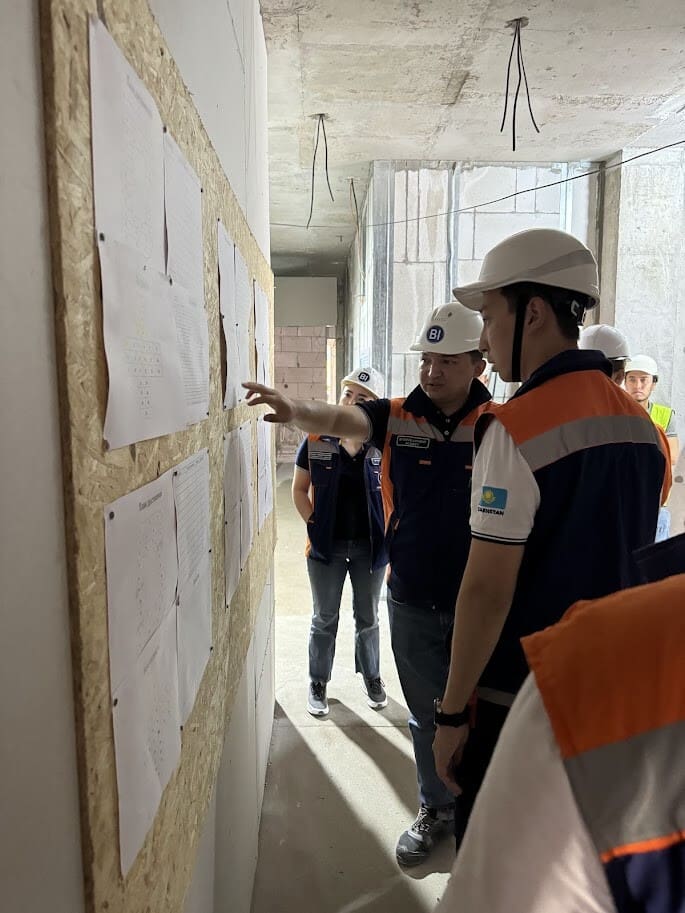
Here’s how our team is applying lean principles with this construction company on the other side of the world:
- Value Definition: In construction, defining value from the customer’s perspective means understanding and aligning with the owner’s project requirements and objectives. This involves early engagement with stakeholders to identify their needs and expectations, ensuring the project delivers value not only in terms of cost but also quality, functionality, and sustainability.
- Value Stream Mapping: Mapping the value stream in construction involves analyzing the entire project lifecycle, from design and procurement to construction and handover. This helps in identifying inefficiencies and waste, such as redundant approvals, material handling, and waiting times. By visualizing these processes, project managers can pinpoint areas for improvement.
- Flow Creation: To create a smooth flow, construction projects can adopt techniques to enhance workflow reliability through better planning and scheduling. Improved systems encourage collaboration among all parties involved, ensuring tasks are completed on time and resources are optimally utilized.
- Establishing Pull: In construction, a pull system can be implemented through Just-In-Time (JIT) delivery of materials. By coordinating closely with suppliers and subcontractors, materials arrive only when needed, reducing on-site inventory and minimizing storage requirements. This approach not only cuts costs but also decreases the risk of material damage and theft.
- Pursuing Perfection: Continuous improvement in construction is achieved through regular feedback loops, performance metrics, and a culture of learning. Techniques like Kata thinking, root cause analysis and the Plan-Do-Check-Act (PDCA) cycle help teams identify issues and implement corrective actions promptly. Moreover, fostering a culture that encourages innovation and employee involvement can drive sustained improvements.
PDCA (Plan-Do-Check-Act) Cycles: Example: A construction company uses PDCA cycles to address specific issues on a project. For instance, to improve the installation process of HVAC systems, the team plans a new approach, implements it on a small scale (Do), monitors the results (Check), and adjusts the process based on feedback (Act). By repeating these cycles, the team continuously refines and optimizes their methods.
Daily Management and Kata Thinking in Construction Project Sites
Implementing daily management and kata thinking on construction project sites can lead to significant improvements in productivity, quality, and safety. All daily activities must first be aligned to overall project goals and then the companies long-term objectives. Hoshin Kanri (Policy Deployment): Example: A construction firm uses Hoshin Kanri to align project goals with the company’s strategic objectives. Top management sets clear, long-term targets for the organization, which are then cascaded down to project teams. Each team develops specific action plans to contribute to the overall goals, and progress is regularly reviewed through catchball sessions. This ensures that everyone is working towards the same objectives and that resources are allocated effectively.
Here are a few examples of how these practices are being effectively applied on these same project sites:
Daily Management
- Daily Stand-Up Tier Meetings: Example: Tier meetings are a structured communication process used in construction to ensure that information flows effectively across different levels of the project hierarchy. Typically, these meetings are held at various tiers, starting with frontline workers, subcontractors, and supervisors and progressing up to senior management. At each tier, participants review key performance indicators, discuss progress, address issues, and plan the day’s activities. This cascading approach allows for the rapid escalation of problems, ensuring that issues are addressed promptly and solutions are communicated back down the hierarchy. Tier meetings foster accountability, enhance transparency, and promote a culture of continuous improvement by involving all team members in the decision-making process and keeping everyone aligned with project goals.
- Visual Management Boards: Example: On a large commercial construction site, visual management boards are used to track the status of various tasks. These boards are prominently displayed on-site and include information such as the schedule, progress updates, safety alerts, and key performance indicators (KPIs). By making information visible to everyone, the team can quickly identify deviations from the plan and take corrective actions.
- 5S Implementation: Example: A construction company implements the 5S methodology (Sort, Set in order, Shine, Standardize, Sustain) to organize and maintain a clean and efficient worksite. Tools and materials are systematically organized, labeled, and stored in designated areas. Regular audits are conducted to ensure compliance with the 5S standards, resulting in a safer and more productive work environment.
Kata Thinking
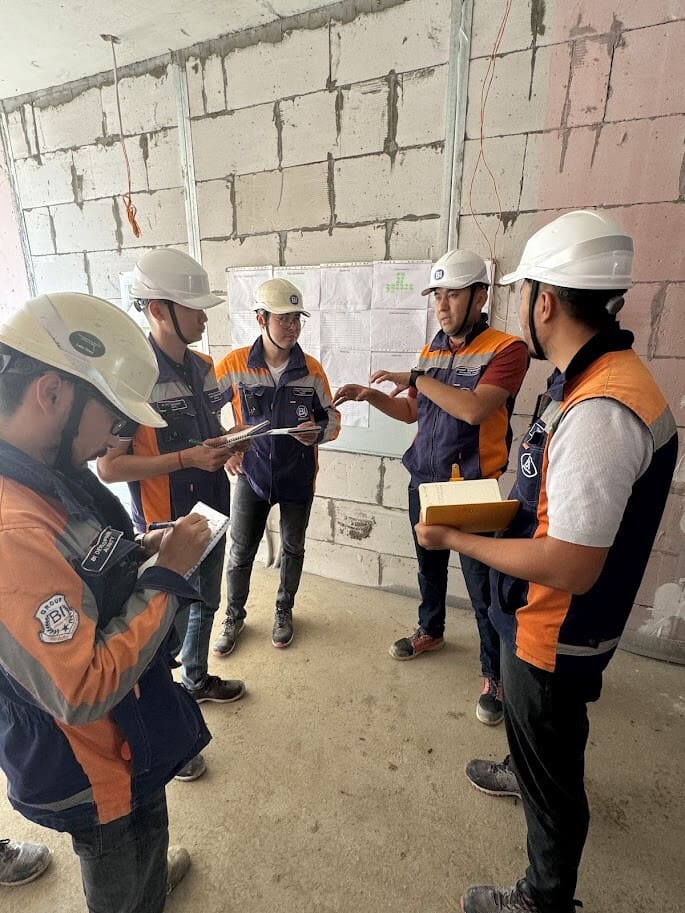
- Improvement Kata: Example: A construction project adopts the Improvement Kata to foster a culture of continuous improvement. Project teams identify specific challenges or areas for improvement, such as reducing rework or improving the efficiency of concrete pouring. They then follow a structured approach to experiment with solutions, learn from the results, and iterate until the desired improvement is achieved. This iterative process helps teams develop problem-solving skills and drive incremental improvements.
- Coaching Kata: Example: Senior project managers on a construction site act as coaches for their teams, guiding them through the Improvement Kata process. During regular coaching sessions, managers help team members set goals, identify obstacles, and develop action plans. By providing ongoing support and feedback, managers help their teams build capabilities and achieve their improvement objectives.
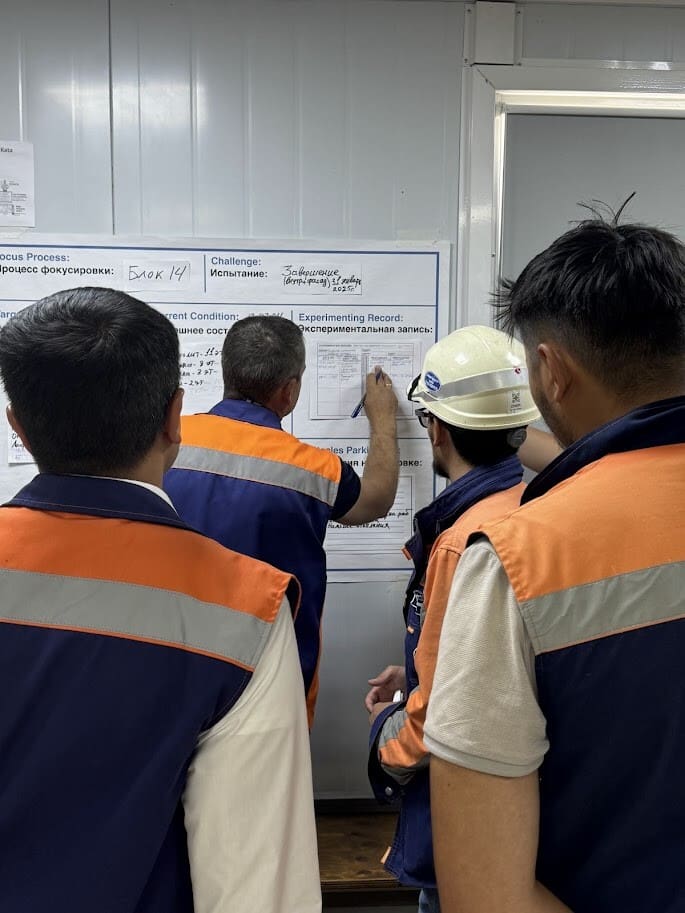
Daily management and kata thinking provide powerful frameworks for improving performance and fostering a culture of continuous improvement on construction project sites. By implementing these practices, construction companies can enhance communication, streamline processes, and achieve better project outcomes. As the industry continues to evolve, the adoption of lean methodologies like daily management and kata thinking will be crucial in driving efficiency, quality, and innovation in construction.
The application of lean thinking in construction is not merely a theoretical exercise but a practical, transformative approach that can address longstanding challenges in the industry. By defining value, mapping value streams, creating flow, establishing pull, and pursuing perfection, construction projects can achieve greater efficiency, reduce costs, and enhance stakeholder satisfaction. As lean principles continue to evolve and adapt, their potential to drive positive change in commercial construction—and beyond—remains immense.